Steel Fabrication for Industrial Construction: Why Choosing the Right Steel Fabricator Matters
In the world of industrial construction, steel is more than just a material; it is the skeletal system of the global economy. From the massive trusses supporting oil refineries to the intricate frameworks of high-capacity warehouses, the quality of your project is entirely dependent on the quality of your metalwork. However, not all steel fabrication is created equal.
In a sector where a single millimetre of error can lead to millions of dollars in structural failure or construction delays, the choice of your fabrication partner is the most critical decision you will make. This guide explores the complexities of industrial steelwork and why your choice of fabricator—like the experts at Credence Construction Ltd—is the foundation of your project’s success.
Understanding the Role of Steel Fabrication in Modern Infrastructure
To appreciate why the “who” matters, we first have to understand the “what.” In its simplest form, steel fabrication is the process of transforming raw steel into specific shapes and structures designed for a unique purpose. But in industrial construction, this is anything but simple.
Industrial projects require steel that can withstand extreme pressures, corrosive environments, and massive load-bearing requirements. Whether it is structural steel for a power plant or specialized plate work for chemical processing, the fabrication process involves complex steps:
- Cutting and Burning: Utilizing plasma, laser, or water-jet technology to achieve surgical precision.
- Forming and Bending: Using heavy-duty press brakes to manipulate steel without compromising its molecular integrity.
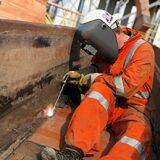
- Welding and Assembly: The critical phase where individual components become a structural whole.
Why Quality Control in Steel Fabrication is Non-Negotiable
In industrial settings, “good enough” is a dangerous philosophy. The structural integrity of an industrial facility is a matter of public safety and financial stability. This is why a professional fabricator must adhere to strict international standards (such as AISC or CWB).
When you partner with a high-tier provider, you aren’t just paying for the metal; you are paying for the Quality Assurance (QA) protocols. This includes:
- Material Traceability: Knowing exactly where every beam of steel came from and its specific carbon content or grade.
- Weld Inspections: Using non-destructive testing (NDT) like ultrasonic or X-ray inspections to ensure there are no hidden cracks or porosities within the joints.
- Dimensional Accuracy: Ensuring that every component matches the shop drawings perfectly, preventing “field fixes” that slow down construction.
The Financial Impact: How the Right Fabricator Saves You Money
It is a common mistake to choose a fabricator based solely on the lowest bid. In industrial construction, the cheapest price upfront often becomes the most expensive bill in the end.
Preventing Costly Field Rework
If a steel fabrication shop delivers a beam that is slightly out of alignment, it doesn’t just mean a hammer won’t fit. It means the entire assembly line stops. You have cranes on-site costing thousands of dollars per hour, a crew of specialized welders waiting, and a project timeline that is slipping. A premium fabricator ensures that when the steel arrives on-site, it fits like a glove, eliminating the need for expensive on-site modifications.
Longevity and Maintenance
Industrial environments are often harsh—subjected to heat, chemicals, and the elements. A superior fabricator understands the importance of surface preparation and coatings. Whether it’s hot-dip galvanizing or specialized epoxy paints, the right finish applied during the fabrication phase can extend the life of a structure by decades, drastically reducing long-term maintenance costs for the owner.
Choosing a Partner with Design-Build Capabilities
The most successful industrial projects are those where the fabricator is involved early in the design phase. At Credence Construction, the focus isn’t just on following a blueprint; it’s about “Design for Manufacturability.”
A skilled fabricator can often look at an engineer’s drawings and suggest modifications that:
- Reduce material waste.
- Simplify the welding process.
- Make the structure easier (and safer) to transport and erect.
By choosing a fabricator with high-level technical expertise, you gain a consultant who can help value-engineer your project from the ground up.
The Importance of Specialized Equipment and Technology
Industrial steel fabrication has moved far beyond the handheld torch. To compete in today’s market, a fabricator must invest in high-tech CNC (Computer Numerical Control) machinery.
CNC technology allows for automated drilling, milling, and cutting, which ensures that every single piece in a 500-unit run is identical to the first. This level of repeatability is essential for industrial modular construction, where components are often fabricated in a shop and shipped across the country to be assembled on-site.
Safety: The Fabricator’s Responsibility
Safety in industrial construction begins in the shop, not on the job site. A fabricator with a poor safety record is likely cutting corners in other areas as well.
A reputable shop maintains a culture of safety that protects their workers and, by extension, your project. If a fabricator has a high accident rate, it leads to work stoppages, insurance hikes, and potential legal liabilities that could eventually reach the project owner. Always ask to see a fabricator’s safety certifications and their EMR (Experience Modification Rate) before signing a contract.
Project Management and Communication
Technical skill is only one half of the equation; the other half is logistics. Industrial projects involve thousands of moving parts. Your fabricator must have a robust project management system in place to provide real-time updates on production status.
The right partner will provide:
- Detailed Timelines: Not just a “delivery date,” but a milestone-based schedule.
- Logistics Planning: Managing the transport of oversized or heavy loads, including permits and specialized trailers.
- Clear Communication: A dedicated point of contact who understands the technical nuances of your specific industry.
Conclusion: Building Your Legacy on a Strong Foundation
In industrial construction, your reputation is built on what you leave behind. A sagging roof, a corroded pipe rack, or a failed joint isn’t just a repair job—it’s a mark against your brand.
Choosing a partner for steel fabrication is about finding a company that values precision as much as you do. It’s about ensuring that every weld is perfect, every cut is exact, and every deadline is met. When you work with a team like the one at Credence Group, you are investing in the peace of mind that comes with knowing your structural framework is built to last a lifetime.
Don’t leave the “skeleton” of your project to chance. Focus on quality, demand precision, and choose a fabricator that understands the unique pressures of industrial construction.