Corrosion Protection for Industrial Structures: Why Potash and Fertilizer Facilities Need to Plan for It From Day One
Corrosion protection is not something most project owners think about until it has already cost them money.
A new potash facility goes up. Five years later, foundation concrete that should have lasted thirty years is already showing cracking and spalling. A grain terminal’s structural steel starts showing surface degradation faster than anyone expected. A fertilizer processing building needs structural repairs that were never supposed to happen this early in the building’s life. Every one of these situations traces back to the same root cause — corrosion protection that was treated as an afterthought rather than a design requirement.
For potash and fertilizer facilities across Saskatchewan, this is not a hypothetical risk. It is one of the most predictable, well-documented, and expensive problems in the entire industrial construction sector — and it is almost entirely preventable if it gets addressed at the right stage of a project.
Why Corrosion Protection Matters More for Potash and Fertilizer Facilities Than Almost Any Other Industrial Building
Most industrial buildings deal with corrosion the way most buildings deal with weather — as a manageable, predictable factor that standard construction practices already account for. Potash and fertilizer facilities are different, and the difference is chemical, not cosmetic.
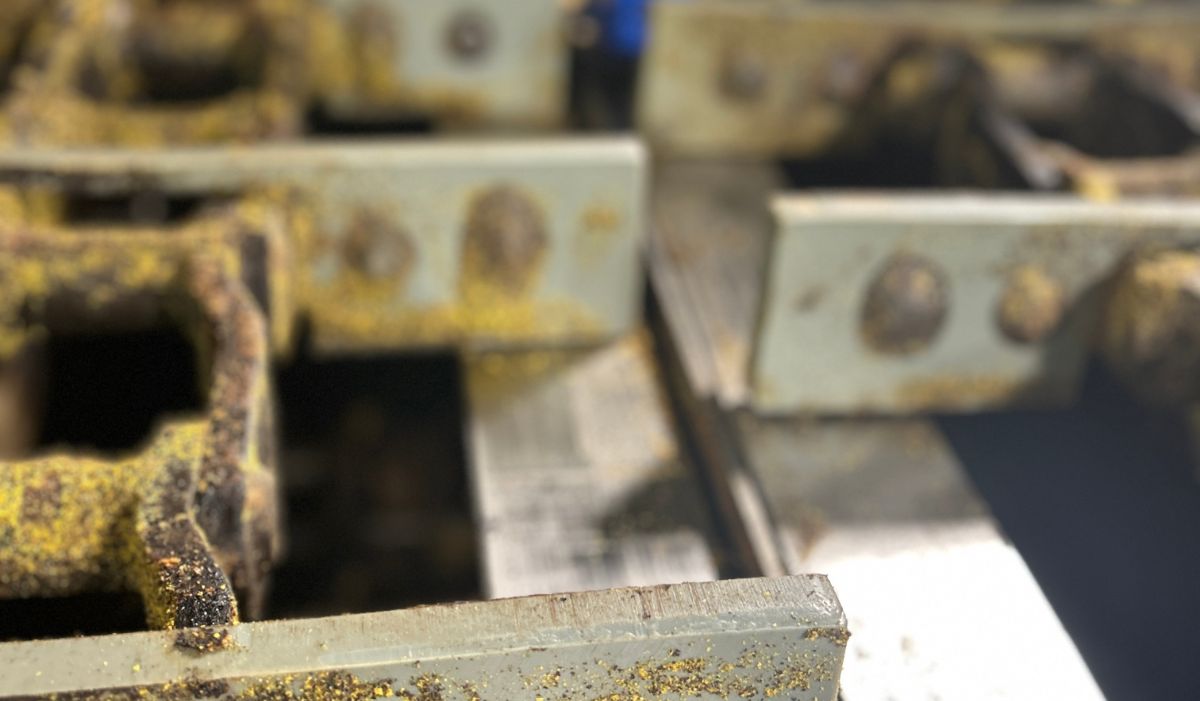
Fertilizer compounds are genuinely aggressive toward both steel and concrete. Fertilizer blends are more corrosive than the deicing salts used on winter roads, and in extreme cases can deteriorate eight inches of unprotected concrete within five years. Potash mining environments carry their own version of this problem — high chloride exposure combined with brine and process water creates conditions where reinforced concrete foundations corrode early in their service life if protection was not built into the original design.
This is the part that catches a lot of facility owners off guard. The corrosion is not happening because the construction was done poorly. It is happening because the structure was specified and built as if it were a standard industrial building, in an environment that is anything but standard.
What Corrosion Protection Actually Means at the Design Stage
Corrosion protection for industrial structures starts long before a single piece of steel is fabricated or a cubic yard of concrete is poured. It starts with an honest assessment of what the structure will actually be exposed to over its service life — and that assessment needs to drive material selection, structural detailing, and protective system specification from the very first drawing.
The starting point is recognising the corrosivity of the specific environment a structure will face, then defining material and protection specifications that match that exposure — not a generic standard that assumes a milder environment. For a potash processing facility or a fertilizer blending plant, that environment includes airborne dust with corrosive chemical properties, direct contact with potash, ammonium nitrate, or phosphate compounds, high humidity combined with temperature extremes across the Saskatchewan seasonal range, and in many cases direct exposure to brine or process water.
Corrosion protection decisions made at this stage typically fall into a few categories. Material selection comes first — deciding whether standard carbon steel with a protective coating system is adequate, or whether the corrosion exposure justifies a higher-grade material such as stainless steel components in the most exposed areas, or fibre-reinforced composite materials in specific applications where steel corrosion risk is severe enough to justify the added material cost. Structural detailing comes next — designing connections, drainage paths, and component geometry to avoid the kind of crevices and water traps where corrosion concentrates fastest. And protective system specification follows — selecting coating systems, galvanizing, or other protective treatments rated for the specific chemical exposure the structure will face, not a generic industrial coating specification borrowed from an unrelated project.
The Gap Most Facility Owners Do Not Realise Exists
Here is the part of the corrosion protection conversation that almost nobody outside structural engineering circles understands clearly — and it is the single biggest gap in how most facility owners approach this problem.
A coating system is only as good as the steel detailing underneath it. Industrial facilities that invest heavily in a premium coating system, but design the underlying steel structure with poor drainage, tight crevices, and connection details that trap moisture, are setting that coating up to fail early regardless of how good the coating itself is. Once a protective coating develops even a small crack or pinhole, water and corrosive agents seep underneath it — and the corrosion that begins is hidden from view, continuing undetected until it has already compromised structural capacity.
This is precisely why corrosion protection cannot be treated as a coatings decision made after the structural design is finished. It has to be a structural design decision from the start — informing how steel members are detailed, how connections are configured, and how the structure sheds water and dust rather than collecting it.
This is also where most of the existing information available to facility owners falls short. The vast majority of corrosion protection content online comes from coating manufacturers and application specialists — companies that are genuinely expert in coating chemistry but are addressing the problem after the structural design is already locked. The structural decisions that determine whether that coating actually performs over a thirty-year service life are made earlier, by the people designing and fabricating the structure itself.
At Credence, this is exactly where our Drafting and Design team gets involved early on potash and fertilizer facility projects across Saskatchewan and Alberta. Corrosion exposure gets factored into structural detailing decisions before fabrication begins — connection geometry that sheds water rather than trapping it, drainage paths designed into the structure rather than added afterward, and material specifications matched to the actual chemical environment the facility will operate in.
What This Looks Like in Steel Fabrication
The corrosion protection conversation continues directly into how a structure is fabricated, not just how it is designed.
Surface preparation before any protective coating is applied is one of the most consequential — and most frequently underestimated — steps in the entire process. Removing scale, rust, and surface contamination through proper abrasive blasting creates the surface profile a coating system needs to bond properly and perform to its rated service life. A coating applied over inadequately prepared steel will fail years earlier than the same coating applied correctly, regardless of how much the coating itself cost.
Weld quality matters here too, in a way that connects directly back to fabrication standards. Welds in corrosive environments need to be smooth, free of undercut, and free of the small surface irregularities that become initiation points for localized corrosion. This is one of the practical reasons CWB-certified fabrication matters specifically for potash and fertilizer facility structures — documented weld procedures that produce consistent, clean welds are not just a structural integrity requirement, they directly affect how well a protective coating system performs over the structure’s service life.
Our Steel Fabrication shop fabricates structural components for agricultural and mining facility applications with this connection in mind — surface finish quality and weld consistency that gives whatever protective coating system is specified the best possible foundation to perform on.
Why This Matters Even More on a Plant Turnaround
Corrosion protection is not a one-time decision made at construction. It is an ongoing consideration that resurfaces every time a facility goes through a plant turnaround or major maintenance shutdown.
A turnaround is the point in a facility’s operating life where structural components are most accessible for inspection — and where corrosion damage that has been developing quietly for years finally becomes visible. Identifying corrosion damage during a turnaround and addressing it properly, rather than patching it superficially to get the facility back into operation quickly, is one of the most important decisions a facility manager makes during that shutdown window.
This is also where the connection between corrosion protection and ongoing maintenance becomes clear. Facilities with a structured preventive maintenance schedule that includes regular inspection of protective coatings and structural condition catch corrosion problems while they are still inexpensive to address. Facilities without that structure discover corrosion damage only when it has already become a structural repair project.
What Facility Owners Should Be Asking Before Construction Starts
If you are planning a new potash, fertilizer, or agricultural processing facility in Saskatchewan, or a significant structural addition to an existing one, corrosion protection deserves specific questions at the design stage — not an assumption that standard practice will be adequate.
Has the structural engineer specifically assessed the chemical exposure this structure will face, rather than applying a generic industrial design standard? Are connection details designed to shed water and dust rather than trap them? Is the material specification — carbon steel with coating, galvanized components, stainless steel in high-exposure areas — matched to the actual corrosivity of the environment rather than a default specification? And does the fabricator have a documented surface preparation and weld quality process that gives the specified coating system the foundation it needs to perform?
A structure that gets these decisions right at the design and fabrication stage costs more upfront in some cases — but it costs dramatically less over a thirty-year service life than a structure that has to be repaired or partially rebuilt within the first decade because corrosion protection was treated as someone else’s problem to solve later.
If you are planning a potash, fertilizer, or agricultural facility project in Saskatchewan or Alberta and want to talk through how corrosion exposure should factor into your structural design and fabrication approach, connect with the Credence team before your design is finalized. The decisions that protect a structure for decades are made at the start — not after the corrosion has already begun.