
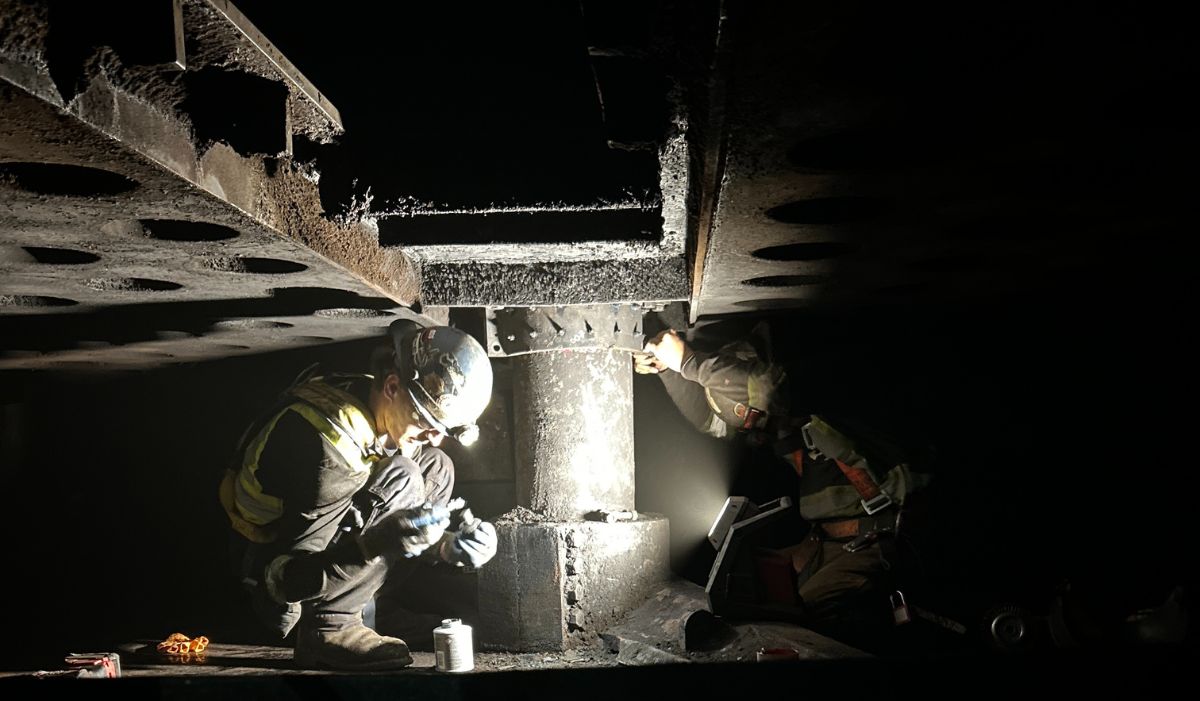
Confined Space Entry on Industrial Sites: What Saskatchewan Contractors Need to Know
A grain bin in Yorkton looks empty from the top. A reactor vessel at a potash facility looks inert once it’s been shut down. A hopper at a feed mill looks like nothing more than a steel box waiting to be cleaned. None of that is true. Every one of those spaces can kill a worker in under three minutes if oxygen levels, engulfment hazards, or atmospheric contaminants aren’t properly assessed first. That’s the entire reason confined space entry procedures exist, and it’s why every contractor working mining, agriculture, or industrial sites across Saskatchewan needs to treat this discipline as a non-negotiable part of daily operations — not paperwork to get through before the real work starts.
At Credence Construction, we work inside bins, hoppers, vessels, and structural cavities across the prairie provinces every week. This guide breaks down what confined space entry actually requires under Saskatchewan’s Occupational Health and Safety Regulations, where the highest-risk gaps tend to appear, and what a genuinely safe entry program looks like on a working industrial site.
What Qualifies as a Confined Space Under Saskatchewan OHS Regulations
Under The Occupational Health and Safety Regulations, 2020 (Saskatchewan), a space is classified as confined when it meets three conditions simultaneously: it is fully or partially enclosed, it is not designed or intended for continuous human occupancy, and it has limited or restricted means of entry and exit. Critically, a space does not need to be small to qualify. A grain storage bin large enough to walk inside, a structural steel tank under fabrication, or an underground utility vault on a mine site can all meet the definition.
On the industrial sites we work — grain handling facilities, potash and mining operations, agricultural processing plants — common confined space entry scenarios include:
- Grain bins, hoppers, and silos where engulfment and bridging hazards are present
- Process vessels, tanks, and reactors awaiting cleaning, inspection, or repair
- Below-grade vaults, sumps, and pits with limited ventilation
- Structural steel members and ductwork during fabrication or maintenance access
- Conveyor housings and material handling enclosures
Why Confined Space Entry Demands a Higher Standard of Risk Control
The hazards inside a confined space rarely announce themselves. That’s what makes confined space entry fundamentally different from most other site work — the danger is often invisible, odourless, and capable of incapacitating a worker before they recognize anything is wrong.
Oxygen Deficiency and Enrichment
Normal atmospheric oxygen sits at roughly 20.9%. Inside a confined space, oxygen can be displaced by inert gases used in purging processes, consumed by rusting steel or decomposing grain, or — in the opposite direction — enriched by leaking oxygen lines to dangerously flammable levels. A worker entering a space with oxygen below 19.5% can lose consciousness within seconds with no warning sensation beforehand.
Toxic and Flammable Atmospheres
Grain bins generate hydrogen sulphide and elevated carbon dioxide from decomposing organic material. Tanks and vessels that previously held process chemicals can retain residual vapours long after visual cleaning appears complete. Welding or cutting inside a confined space introduces fumes and can rapidly consume available oxygen. Every confined space entry plan must account for atmospheric testing before entry and continuous monitoring throughout the work — a single pre-entry reading is not sufficient when conditions can change minute to minute.
Engulfment and Entrapment
Grain bins present one of the most underestimated hazards on agricultural and processing sites: engulfment. Flowing grain behaves like quicksand — a worker can be pulled under in seconds, and the pressure of surrounding material makes self-rescue functionally impossible without mechanical assistance. Bridged or crusted grain that collapses underfoot creates the same risk. Bin entry without a lockout of all augers, conveyors, and discharge equipment is one of the most common root causes of grain entrapment fatalities across the prairies.
The Saskatchewan Confined Space Entry Permit System: Core Requirements
Saskatchewan’s OHS Regulations require a written confined space entry permit system for any work involving a classified confined space. The permit isn’t a formality — it’s the documented control mechanism that ties every other safety requirement together. A compliant program includes:
- Hazard Assessment: A documented evaluation of the specific space identifying atmospheric, physical, and mechanical hazards before any work is authorized
- Atmospheric Testing: Pre-entry testing for oxygen content, flammability, and toxic substances using calibrated gas detection equipment, with continuous monitoring during occupied entry
- Isolation and Lockout: Mechanical, electrical, and process isolation of all equipment that could introduce a hazard — augers, agitators, pumps, and energy sources must be locked and tagged before entry begins
- Ventilation: Mechanical ventilation where atmospheric testing indicates any deviation from safe parameters, with forced air exchange maintained throughout the work
- Attendant Requirements: A trained attendant stationed outside the space at all times, maintaining continuous communication with entrants and never leaving their post or entering the space themselves
- Rescue Plan: A site-specific, equipment-ready rescue plan established before entry — not a general reference to calling emergency services after an incident has already occurred
- Permit Authorization: A signed entry permit specifying the names of entrants, the duration of authorized work, and the specific control measures verified before entry is approved
Where Confined Space Programs Break Down on Real Job Sites
Most confined space entry incidents don’t happen because a company has no program. They happen because the program exists on paper but isn’t followed with discipline on a specific day, under specific time pressure. The patterns we watch for most closely on industrial sites include:
Skipping Re-Testing After a Break
A space tested safe at 7:00 a.m. is not guaranteed safe at 10:00 a.m. Welding activity, equipment operation nearby, or even temperature changes can alter atmospheric conditions inside an enclosed space within an hour. Crews returning from a break must re-test before re-entry, every time, without exception.
Treating the Attendant Role as Optional
On a tight schedule, it’s tempting to pull the attendant to help with another task “just for a minute.” That minute is exactly when an entrant can go down. The attendant role under Saskatchewan OHS Regulations is a dedicated function — the person cannot perform other duties that would interfere with continuous monitoring of the entrant and the space.
Inadequate Rescue Capability
Calling 911 is not a confined space rescue plan. By the time external emergency responders arrive, assess the space, and stage equipment, a worker overcome by an oxygen-deficient atmosphere has often already suffered irreversible harm. Saskatchewan regulations require that the rescue plan match the specific space — retrieval lines and tripods for vertical entries, mechanical retrieval systems for grain engulfment scenarios, and personnel trained and equipped to execute the rescue without becoming a second casualty themselves.
Incomplete Isolation of Mechanical Hazards
On grain and material handling sites specifically, the energy isolation step gets rushed more than any other. An auger that appears off but isn’t locked out, tagged, and physically verified de-energized remains capable of starting unexpectedly — whether from a control system fault, a second worker unaware of the entry, or a scheduled automation cycle.
Confined Space Entry in Grain Handling: A Saskatchewan-Specific Risk Profile
Saskatchewan’s agricultural economy means a meaningful share of confined space entry work in this province happens inside grain bins, hoppers, and storage structures — environments with hazard profiles distinct from industrial process vessels. Beyond standard atmospheric concerns, grain spaces introduce:
- Bridging and crusting, where grain forms a false surface over a void that can collapse without warning under a worker’s weight
- Avalanche risk from flowing grain during unloading, capable of fully engulfing a worker against a bin wall in seconds
- Dust accumulation creating combustible atmosphere risk in addition to respiratory hazards
- Limited rescue access through standard bin hatches, requiring specific extraction equipment and trained personnel positioned before entry begins
Agricultural and grain handling clients working with Credence on bin maintenance, hopper fabrication, or structural repair benefit from crews who treat grain-specific confined space entry hazards as a distinct discipline — not a variation on standard tank entry procedures.
Training and Competency Requirements for Confined Space Workers
Saskatchewan OHS Regulations require that workers performing confined space entry — including entrants, attendants, and supervisors authorizing entry — receive training specific to their role and the hazards of the spaces they’ll be working in. Generic safety orientation does not satisfy this requirement. A defensible training program includes:
- Hazard recognition training specific to atmospheric, mechanical, and physical risks in confined spaces
- Proper use and calibration verification of gas detection equipment
- Permit system procedures, including how to complete, verify, and close out an entry permit
- Rescue and retrieval equipment operation, including tripod and winch systems for vertical entries
- Refresher training at intervals that reflect both regulatory expectations and the practical reality that skills atrophy when not regularly exercised
The Cost of Getting Confined Space Entry Wrong
Confined space incidents carry a grim statistical pattern: a disproportionate number of fatalities involve a second worker who enters the space to rescue a colleague without proper equipment or assessment, becoming a casualty themselves. This is precisely why a rigorous confined space entry program isn’t just about protecting the primary entrant — it’s about ensuring nobody on site ever needs to make a split-second decision to enter an unassessed space during an emergency, because the controls and rescue equipment were already in place before the first entry happened.
Beyond the human cost, the operational consequences of a confined space incident are severe: work stoppage orders from Saskatchewan OHS officers, mandatory investigation periods that can halt an entire site, and significant liability exposure for the contractor and the facility owner alike. A documented, consistently followed entry program is the clearest evidence of due diligence available if an incident is ever investigated.
Common Questions About Confined Space Entry in Saskatchewan
Does every entry into a grain bin require a confined space permit?
Yes, if the bin meets the regulatory definition of a confined space — which most working grain bins do. Even brief entries for inspection or minor maintenance require the same confined space entry controls as longer-duration work. Risk doesn’t scale down with time spent inside the space; an entrant exposed to an oxygen-deficient atmosphere for thirty seconds faces the same danger as one exposed for thirty minutes.
Who is authorized to approve a confined space entry permit?
A competent person with documented training and authority under the site’s safety program must review the hazard assessment and sign the entry permit before work begins. This individual is accountable for verifying that isolation, testing, ventilation, and rescue arrangements are actually in place — not simply that the paperwork has been filled out.
What atmospheric readings require entry to be stopped immediately?
Oxygen readings below 19.5% or above 23.0%, any detectable level of a known toxic contaminant exceeding occupational exposure limits, or a combustible gas reading above 10% of the lower explosive limit should halt entry immediately. Work should not resume until the space has been ventilated, re-tested, and confirmed safe by a competent person.
How Credence Construction Approaches Confined Space Entry
Credence Construction has spent years working inside the bins, vessels, and structural spaces of Saskatchewan’s mining and agricultural facilities. Our crews — millwrights, ironworkers, scaffolders, and welders — operate under a confined space entry program built around documented permits, calibrated atmospheric testing, dedicated attendants, and rescue plans specific to each space we work in. Safety isn’t a separate checklist layered on top of our maintenance, fabrication, and construction services — it’s the foundation our crews are trained to work from on every shutdown, turnaround, and greenfield project we take on.
If your facility has upcoming maintenance, repair, or fabrication work that involves confined spaces — grain bins, process vessels, structural cavities, or below-grade vaults — our team can help you plan the work with the entry controls it actually requires. Reach out to Credence Construction to discuss your project’s specific confined space entry needs and how our experienced crews can get the work done safely and on schedule.
2 Comments
Comments are closed.