Scaffold Inspection Checklist: What a Competent Person Checks Before Anyone Climbs
A scaffold that was perfectly safe at four o’clock yesterday can be a different structure at six this morning. Overnight wind, a frozen base, a plank someone borrowed, a brace pulled for a delivery. Nothing looks wrong from the ground, and that’s the problem. A scaffold inspection checklist exists to turn “looks fine” into “checked and confirmed.”
Most checklists you’ll find online are blank forms to download. They tell you what boxes exist, not what you’re actually looking for or why. This guide walks through what a competent person checks on an industrial scaffold, when those checks happen, and how to keep a checklist from becoming a signature exercise.
What Is a Scaffold Inspection Checklist?
A scaffold inspection checklist is a structured list a competent person uses to examine a scaffold and confirm it’s safe to use. It covers the base, the structure, the platforms, the guardrails, the access, and the loads. The checklist guides the inspection and records the result. It doesn’t replace the person’s judgment.
That distinction matters. A competent person is someone with the training, knowledge, and experience to recognize scaffold hazards and the authority to fix them. A checklist in untrained hands produces ticks, not safety. Canada’s national standard for scaffolds, CSA Z797, sets out the code of practice for access scaffolds, and provincial regulations add the legal requirements. For Manitoba, Safe Work Manitoba publishes a guide for scaffolds and elevated work platforms. Our guide to Saskatchewan’s OHS regulations for scaffolding covers the Saskatchewan side. Check the current regulation where you’re working.
When a Scaffold Inspection Is Needed
A scaffold isn’t inspected once. The inspection follows the scaffold’s life:
- Before first use, once erection is complete
- Daily, before each shift, while the scaffold is in use
- After any change, such as adding a lift, removing a brace, or extending a platform
- After severe weather, including high wind, heavy snow, or freezing rain
- After any impact or event that could have damaged it
Saskatchewan expects inspection by a competent person before use and daily while in use. On sites that run through a Prairie winter, the “after weather” inspection is the one that gets skipped most often.
Scaffold Inspection Checklist: Start at the Ground
Look at the base first, because everything above depends on it.
- Firm, level footing. Soft, frozen, or sloping ground can shift under load.
- Base plates on mudsills or sole boards. Base plates in firm contact, not sitting on loose blocks or bricks.
- No undermining. Look for washouts, trenches, or excavation near the base.
- Plumb and level. A scaffold that leans is already telling you something.
Frost heave and thaw cycles make the Prairie base a moving target. A base that was solid in October may not be in February.
Scaffold Inspection Checklist: Structure and Bracing
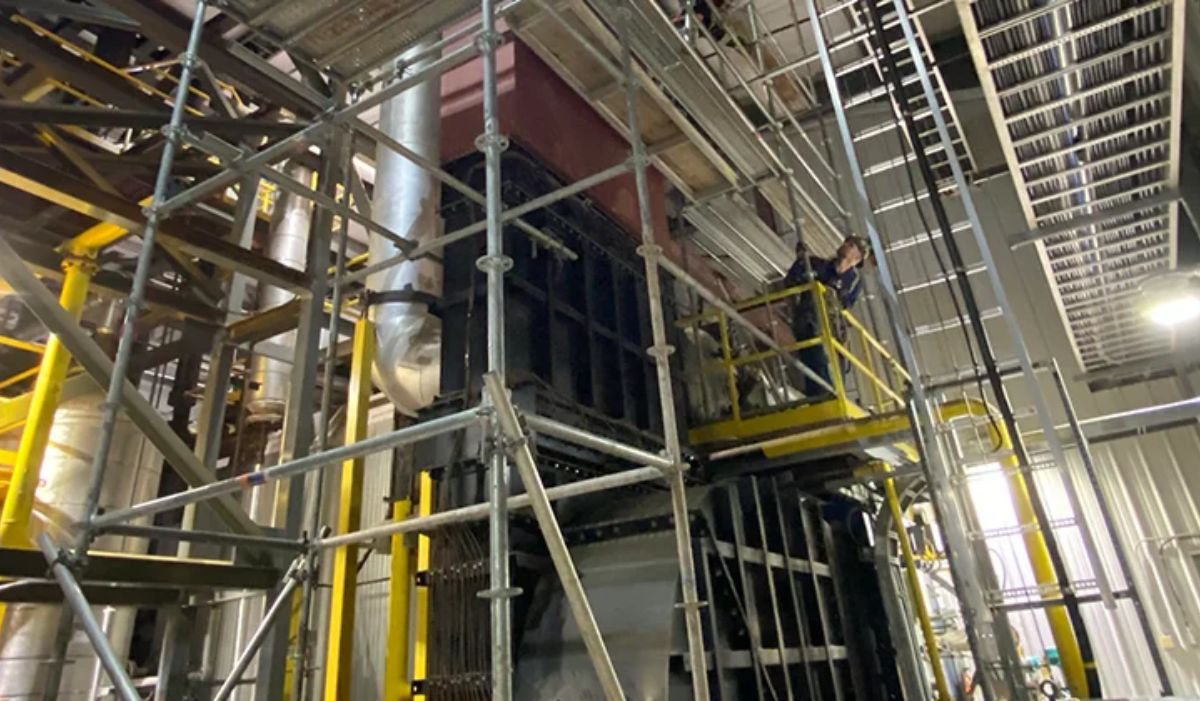
Walk the full structure, not just the bottom lift.
- All components present. Standards, ledgers, transoms, and braces in place, with nothing missing or substituted.
- No damage. Bent, cracked, corroded, or modified members are removed from service.
- Bracing and ties. Diagonal bracing intact, and ties to the supporting structure secure.
- Connections tight. Pins, couplers, and locks fully engaged.
- No unauthorized changes. If someone has altered the scaffold, it needs a fresh inspection before use.
Scaffold Inspection Checklist: Platforms, Guardrails, and Access
This is where most falls happen, so it deserves the closest look.
- Fully planked platforms. No gaps where a person or a tool could fall through, and planks undamaged and secured against shifting.
- Guardrails and toe boards on open sides. Top rails, mid rails, and toe boards in place wherever the regulation requires them.
- Safe access. Ladders or stairs secured and in good condition, so nobody climbs the frame.
- Clean decks. Debris, ice, and loose material removed.
If guardrails aren’t complete yet, as during erection or dismantling, the work needs its own protection, which is where a fall protection plan comes in.
Scaffold Inspection Checklist: Loads and Surroundings
The structure also has to suit the job.
- Load within rating. Materials and workers don’t exceed what the scaffold was built to carry.
- Overhead and nearby hazards. Power lines, overhead work, moving equipment, and pipework near the scaffold.
- Mobile scaffolds. Wheels locked, and no movement with workers or material aboard.
- Hot work nearby. Welding or cutting near planks, netting, and sheeting is a fire risk, so it needs a hot work permit.
Prairie Conditions: Wind, Ice, and Snow
Weather turns a routine scaffold inspection into something more demanding. Wind loads increase on sheeted or netted scaffolds. Ice on planks, ladders, and frames changes the fall risk instantly. Snow adds weight and hides defects. The cold also affects the people doing the inspection, which is covered in our post on cold stress. A competent person should have the authority to hold the scaffold out of service until conditions are safe.
After the Inspection: Tag, Record, and Fix
An inspection only counts if the result is visible and acted on. Once the competent person is done, the scaffold’s status goes on its tag, and any defect is corrected before anyone climbs. Our guide to the scaffold tagging system explains what the colours mean. Keep the written record too: who inspected, when, what was found, and what was fixed.
On our sites, scaffolds are inspected by a competent person before use and tagged with the result. For more on how that fits our safety work, see our industrial scaffolding service.
How the Checklist Fits Into a Safety Program
A scaffold inspection checklist is one link in a chain. The job safety analysis identifies scaffold hazards before the work begins, and the morning toolbox talk tells the crew what changed. If someone spots a loose plank or a missing brace, that belongs in near miss reporting, and a real failure deserves a proper incident investigation.
Where a Scaffold Inspection Checklist Goes Wrong
- Ticking boxes from the ground. An inspection that doesn’t involve walking and touching the scaffold.
- Using an untrained inspector. The checklist can’t supply the knowledge.
- Copying yesterday’s results. Conditions change.
- Skipping the post-change check. Alterations are when scaffolds become unsafe.
- Finding a defect and not closing it out. The inspection means nothing without the fix.
Frequently Asked Questions About Scaffold Inspection Checklists
Who can complete a scaffold inspection checklist?
A competent person: someone trained and experienced enough to recognize scaffold hazards and with the authority to correct them.
How often should a scaffold be inspected?
Before first use, before each shift while in use, after any alteration, and after severe weather or impact.
What should a scaffold inspection checklist include?
The base and footing, structure and bracing, platforms and guardrails, access, loads, and surroundings, plus the inspector’s name and the date.
What happens if a scaffold fails inspection?
It should be tagged out of service, with access blocked until the defect is corrected and the scaffold is re-inspected.
Is a scaffold inspection checklist legally required?
Inspection is required in Canadian jurisdictions, though the exact documentation varies by province. Check the regulation where the work is happening.
Check It Before You Climb It
A good scaffold inspection checklist doesn’t make a scaffold safe. It makes the inspection thorough, repeatable, and visible. The safety comes from a competent person who walks the structure, trusts what they see, and has the authority to say no.
Credence Construction erects, inspects, and maintains scaffolding across the mining, agricultural, and industrial sites we work on in Saskatchewan, Alberta, Manitoba, and Western Ontario. If your next project needs scaffolding built and inspected properly, call us at 306-786-7000.