
Hot Work Permit: What It Is and Why Welding Sites Need One
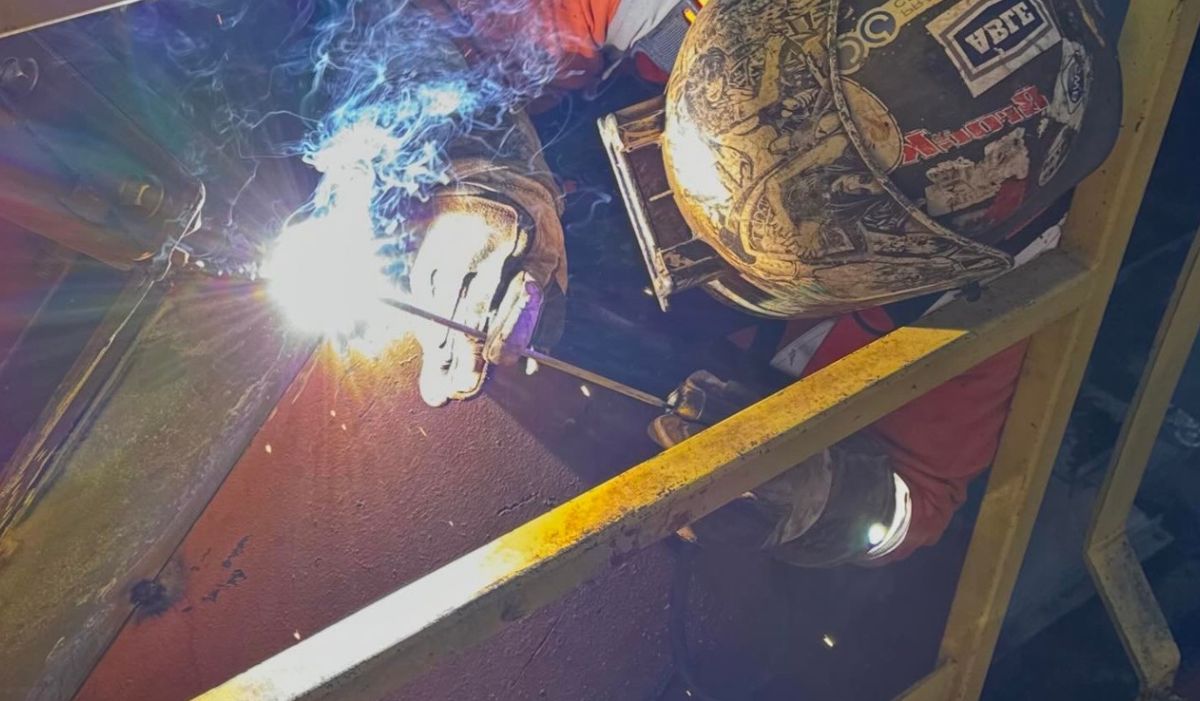
A welding arc throws sparks that can travel further than most people expect, land somewhere nobody’s watching, and smoulder for an hour before anyone notices smoke. That’s the gap a hot work permit is built to close. It’s not paperwork for its own sake — it’s the step that forces someone to actually look at a work area before the torch gets lit, instead of after something starts burning.
On a site doing structural steel, fabrication, or maintenance welding, a hot work permit isn’t a once-in-a-while form. It’s a routine that runs every time cutting, welding, or grinding happens outside a space built for it. This guide covers what a hot work permit actually requires, how fire watch fits in, and where the process tends to break down when crews are moving fast.
What Is a Hot Work Permit?
A hot work permit is a written authorization confirming that a work area has been checked and prepared before welding, cutting, grinding, or any other spark- or flame-producing task begins. The permit isn’t the safety measure itself — it’s the record that the actual safety measures were taken: combustibles cleared, surfaces checked, a fire watch assigned, and an extinguisher within reach.
In Canada, hot work practices are shaped by CSA W117.2, Safety in Welding, Cutting and Allied Processes, alongside provincial regulations and whatever hot work program a specific site runs. The Canadian Centre for Occupational Health and Safety explains the basics of hot work management, including why a permit system matters most in areas not purpose-built for welding.
Why a Hot Work Permit Exists in the First Place
Welding, cutting, and grinding don’t just create light and noise. They throw sparks and hot slag, sometimes for a surprising distance, and those sparks don’t need a direct hit on something flammable to start a fire. A spark that lands in a crack, behind insulation, or inside a wall cavity can smoulder quietly and ignite long after the welder has packed up and left.
A hot work permit forces a simple but important habit: stop and look before starting. That means clearing combustible material from the area, checking for flammable vapours or dust, and confirming the surroundings — not just the immediate work surface — are actually safe for the job.
What Goes Into a Hot Work Permit
A real hot work permit, not just a box someone checks, typically covers:
- Location and scope. Exactly where the work is happening and what task is being performed.
- Area inspection. Confirmation that combustibles have been removed or shielded, and that floors, walls, and openings below or beside the work area have been checked.
- Fire watch assignment. A named person responsible for watching the area during the work and for a set period afterward.
- Fire suppression equipment. A charged extinguisher appropriate for the hazard, located within reach of the work.
- Duration. A hot work permit is valid for a specific task and timeframe, not an open-ended authorization.
- Sign-off. A supervisor or authorized person confirming the area meets the conditions before work starts.
Skipping any one of these doesn’t just weaken the permit on paper — it’s usually the exact gap that lets a small spark turn into a real fire.
Fire Watch: The Part of a Hot Work Permit That Keeps Working After the Torch Stops
The fire watch is one of the most important parts of a hot work permit, and one of the most commonly rushed. A fire watch isn’t just someone standing nearby during the cutting or welding. Their job is to keep watching the area after the work stops too, since a smouldering spark can take time to turn into visible flame. Many hot work programs call for the fire watch to continue for a set period after the task ends, precisely because fires caused by hot work often don’t show up immediately.
A fire watch also needs the right tools on hand — an extinguisher they know how to use, and in many cases a way to raise an alarm quickly if something does ignite. A fire watch assigned on paper but standing somewhere else on site isn’t a fire watch. It’s a name on a form.
Where Hot Work Permits Fit on an Active Industrial Site
Hot work on a plant, mine, or agricultural facility rarely happens in a clean, empty shop. It happens during repairs, modifications, and plant turnarounds, often near equipment, dust, or process materials that make the stakes higher than a typical fabrication shop floor.
A few situations come up often enough to call out directly:
Welding near confined spaces. Cutting or welding on or near a tank, bin, or vessel can overlap directly with confined space entry and rescue planning, since atmospheric hazards and fire risk can compound each other in an enclosed area.
Welding on equipment that hasn’t been isolated. Hot work on or near equipment with stored energy is exactly why lockout tagout and hot work permits often get coordinated together rather than treated as two separate processes.
Grain and dust environments. Agricultural facilities carry their own hot work risk from combustible dust, which means area inspection before hot work has to look well beyond the immediate work surface.
Our welders work under hot work permit systems as a standard part of every job, whether that’s new fabrication or in-plant repair work during a shutdown.
Where Hot Work Permits Break Down
Most hot work incidents don’t come from a missing permit system. They come from small shortcuts inside a system that technically exists:
- A permit filled out after the work already started, treating it as a formality instead of a pre-check
- A fire watch that leaves once the welding stops, instead of staying for the required monitoring period
- An area inspection that only checks the immediate work surface, missing combustibles on the other side of a wall or floor
- A permit written for one task reused for a different one, without a fresh inspection
- No extinguisher actually within reach, even though one exists somewhere on site
The fix is the same each time: treat the permit as a real check, not a signature collected to move faster.
What to Ask a Contractor About Their Hot Work Practices
A few direct questions show whether a contractor treats hot work permits as routine or as an afterthought:
- Is a hot work permit required for every job outside a designated welding area, every time?
- How long does your fire watch stay on site after the work stops?
- How does your hot work process coordinate with lockout and confined space procedures when they overlap?
- Who signs off on the area inspection, and what are they actually checking?
Clear, specific answers usually mean the process is real. Vague answers usually mean it exists mostly on paper.
Frequently Asked Questions About Hot Work Permits
What counts as hot work?
Hot work includes welding, cutting, brazing, soldering, and grinding — any task that produces sparks, open flame, or enough heat to ignite nearby materials.
How long does a fire watch need to stay after hot work is finished?
Requirements vary by site and jurisdiction, but many hot work programs call for continued monitoring for a set period after the task ends, since a smouldering spark can ignite well after the work itself has stopped.
Is a hot work permit required inside a designated welding shop?
Typically not, since a shop built and equipped for welding already has the controls a permit is meant to confirm elsewhere. Permits are mainly required when hot work happens outside that kind of designated area.
What’s the difference between a hot work permit and a lockout tagout procedure?
A hot work permit manages fire risk from welding, cutting, and similar tasks. Lockout tagout controls hazardous energy on equipment being serviced. The two often apply to the same job at once, which is why coordinating them matters.
A Permit That Earns Its Place
A hot work permit works because it forces a pause — a real look at the area before the first spark flies, and a real watch after the work is done. Skipping that pause is how a routine repair turns into an incident nobody planned for.
Credence Construction runs hot work permit practices as standard across the fabrication, repair, and maintenance work our crews perform in Saskatchewan, Alberta, Manitoba, and Western Ontario. If your next project involves welding or cutting on an active site, call us at 306-786-7000 and we’ll help you plan it safely.
2 Comments
Comments are closed.