
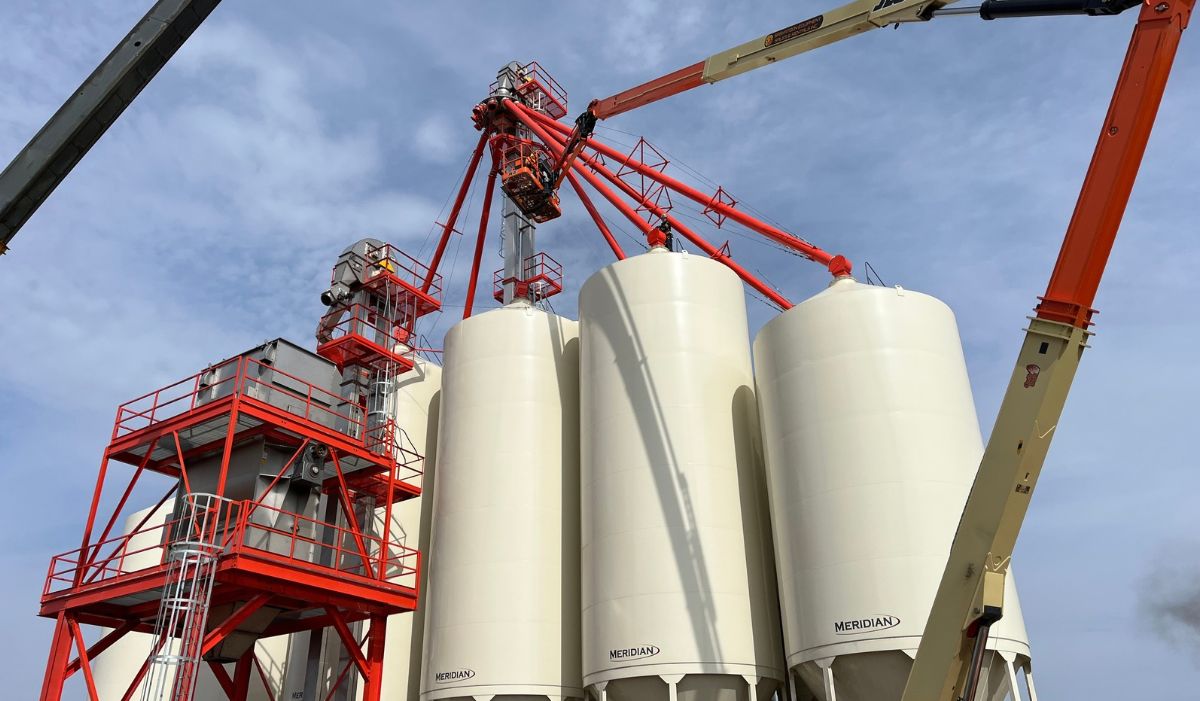
Confined Space Rescue Plan: What Every Industrial Site Needs Before Anyone Enter
A grain bin, a tank, a hopper — the moment someone climbs inside, the question that matters most isn’t “will this job go fine.” It’s “if it doesn’t, how fast can we get them out.” A confined space rescue plan answers that question before the entry ever starts, not while someone is already in trouble. Waiting until an emergency happens to figure out the rescue plan is how one incident becomes two.
Confined space entry gets a lot of attention: permits, atmospheric testing, isolation. Rescue planning is the part that’s easy to treat as paperwork rather than the thing that actually saves someone. This guide covers what a confined space rescue plan needs to include, the difference between rescue methods, and where plans usually fall apart when they’re tested for real.
What Is a Confined Space Rescue Plan?
A confined space rescue plan is the documented procedure for removing a worker from a confined space in an emergency, covering the equipment, personnel, and method that will be used before anyone enters. It sits alongside the entry permit and the hazard assessment, but it answers a different question. The permit asks whether it’s safe to go in. The rescue plan asks what happens if it stops being safe once someone already has.
In Canada, this work is shaped by CSA Z1006, the national standard for the management of work in confined spaces, along with provincial regulations that require a rescue plan before entry into a permit-required space. The details vary by province, so the specific requirement for a given site should always be checked against the regulation that applies there.
Non-Entry Rescue Comes First
The single most important idea in a confined space rescue plan is this: the best rescue is the one where nobody else has to go in.
Non-entry rescue means retrieving a worker using equipment from outside the space — most commonly a harness connected to a retrieval line running through a tripod and winch mounted at the entry point. If something goes wrong, the attendant outside can start pulling the worker out immediately, without waiting for a rescue team to arrive and without a second person entering a space that just proved itself dangerous.
This only works if the equipment is in place and rigged correctly before entry, which is why a confined space rescue plan has to be decided in advance, not improvised in the moment. A tripod that’s still in the truck when someone goes down is not a rescue plan. It’s a delay.
Entry rescue — where a trained rescue team goes into the space to retrieve someone — is sometimes the only option, particularly in spaces with tight configurations or obstacles that make a straight vertical retrieval impossible. It also carries far more risk, since it puts a second person into the same hazardous environment. A solid confined space rescue plan uses entry rescue as a backup, not a default.
What a Confined Space Rescue Plan Needs to Cover
A rescue plan is more than a phone number for the fire department. At minimum, it should set out:
- Rescue method. Non-entry retrieval, on-site trained rescue personnel, or external emergency services, decided for that specific space before entry begins.
- Rescue equipment. Tripods, winches, harnesses, and retrieval lines rated for the space and positioned where they can actually be used, not stored somewhere else on site.
- Trained personnel. Attendants and rescue team members who know how to use the equipment, not just employees assigned to stand nearby.
- Communication. A clear method for the attendant to reach the entrant, and a clear method for calling additional help if the plan escalates.
- External response coordination. If local emergency services are part of the plan, they need to know the specific space exists and what it requires. A 911 call is not a substitute for advance coordination.
- Site-specific hazards. Atmospheric risks, engulfment potential, and physical obstacles that would affect how a rescue is actually carried out in that particular space.
Skipping any of these doesn’t just weaken the plan on paper. It’s usually the exact gap that turns a close call into a fatality.
Why Relying on 911 Alone Falls Short
It’s tempting to treat “call emergency services” as the whole rescue plan, especially for smaller sites without a dedicated rescue team. The problem is timing. Confined space emergencies are often driven by oxygen deficiency or a toxic atmosphere, where the window to act safely is measured in minutes. An external response, however good, takes time to arrive, assess the space, and prepare a rescue — time an entrant with an atmospheric emergency may not have.
That’s exactly why non-entry rescue is worth building into the plan wherever it’s physically possible. It puts the fastest option in the hands of the person already standing at the entrance, rather than making everyone wait for help to arrive from somewhere else.
Where Confined Space Rescue Plans Actually Fail
Rescue plans rarely fail because nobody thought about rescue. They fail in the small gaps between the plan on paper and the plan in practice:
- Equipment staged somewhere other than the entry point, costing precious minutes during the retrieval
- Attendants who’ve never actually operated the tripod and winch, only read about it
- A rescue plan written for one space and reused for a different one without checking whether it still fits
- No communication method that works inside the space itself, particularly in metal tanks and bins where radio signal drops
- A plan that assumes external services without ever confirming they know the site exists
Every one of these is fixable before entry, and none of them are fixable once someone is already down.
Building Rescue Planning Into How a Site Actually Works
A confined space rescue plan works best when it’s not treated as a document that gets filed and forgotten. It belongs in the same conversation as toolbox talks before entry, alongside the lockout tagout isolation that should already be in place on any equipment connected to the space. Contractors working toward COR certification build this kind of pre-entry planning into their standard practice, not as a one-time exercise but as part of every entry, every time.
Frequently Asked Questions About Confined Space Rescue Plans
What is the difference between non-entry and entry rescue?
Non-entry rescue retrieves a worker using equipment operated from outside the space, such as a tripod and winch. Entry rescue requires a trained team to physically go into the space, which carries more risk and should generally be the backup option, not the first plan.
Is a confined space rescue plan legally required?
Requirements vary by province, but most Canadian jurisdictions require a documented rescue plan as part of any permit-required confined space entry, guided by standards such as CSA Z1006. The specific requirement should be checked against the regulation in the province where the work is happening.
Can we rely on the local fire department as our rescue plan?
Relying solely on external emergency services is risky because of response time, especially in atmospheric emergencies where minutes matter. A stronger plan pairs non-entry rescue capability on site with external services as additional support, not the sole plan.
Who should be trained to perform confined space rescue?
Attendants and any personnel assigned a rescue role need hands-on training with the actual equipment being used, not just familiarity with the written procedure. Practicing the retrieval before it’s ever needed is what makes the plan usable under pressure.
A Plan That Works Before It’s Tested
A confined space rescue plan only proves itself in an emergency, which means it has to be right before that moment ever arrives. The equipment has to be in place, the people have to know how to use it, and the plan has to match the actual space, not a generic template.
Credence Construction builds rescue planning into every confined space entry across the mining, agricultural, and industrial sites we work on in Saskatchewan, Alberta, Manitoba, and Western Ontario. If your next project involves a bin, tank, or vessel entry, call us at 306-786-7000 and we’ll help you plan it properly.

1 Comment
Comments are closed.