Types of Pipe Fittings: Elbows, Tees, Reducers, Flanges, and Valves Explained for Industrial Piping
An industrial piping system is only as reliable as the components connecting it. Pipes carry liquids, gases, chemicals, and other materials throughout industrial facilities. However, pipes alone cannot manage every change in direction, connection, flow rate, or pressure requirement. That is where pipe fittings come in.
From redirecting fluid through tight spaces to connecting different pipe sizes and controlling flow, each fitting serves a specific purpose. Choosing the wrong component can lead to pressure loss, leakage, unnecessary stress, and costly maintenance problems.
Understanding the different types of pipe fittings is essential for anyone involved in industrial construction, mechanical installation, facility maintenance, or piping system design.
In this guide, we explain the five most common industrial pipe fittings: elbows, tees, reducers, flanges, and valves. We also explore their applications, material considerations, and the practical factors that influence fitting selection.
What Are Pipe Fittings in Industrial Piping Systems?
Pipe fittings are components used to connect, redirect, branch, reduce, expand, or control the flow within a piping network. They help create complete industrial piping systems that meet specific operational and installation requirements.
These components are commonly used in:
- Manufacturing and processing facilities
- Agricultural and grain-handling operations
- Mining and mineral processing plants
- Oil and gas facilities
- Water treatment and distribution systems
- Industrial mechanical installations
Each application has different requirements. For example, a mining facility may need abrasion-resistant piping components, while a processing facility may require materials compatible with specific chemicals and operating temperatures.
Pipe fittings are available in different materials, sizes, connection types, and pressure classes. Their selection should always reflect the actual operating conditions rather than just the pipe diameter.
5 Common Types of Pipe Fittings Used in Industrial Piping
Let’s look at the five essential types of pipe fittings, how they work, and where they are commonly used.
1. Pipe Elbows: Changing the Direction of Flow
A pipe elbow changes the direction of fluid or gas flowing through a piping system. It allows pipes to navigate around equipment, structural obstacles, walls, and other installation restrictions.
Elbows are commonly available in 45-degree, 90-degree, and 180-degree configurations.
Common types of pipe elbows include:
- 45-degree elbow: Changes the direction of flow by 45 degrees. It is useful when a gradual directional change is required.
- 90-degree elbow: Creates a right-angle turn and is commonly used in industrial piping layouts.
- 180-degree elbow: Reverses the direction of flow, often used in return lines and compact piping arrangements.
Elbows are also classified by their radius. Long-radius elbows provide a smoother flow path, while short-radius elbows are useful where installation space is limited.
Where are pipe elbows used?
They are frequently installed around pumps, tanks, compressors, processing equipment, and industrial machinery.
Important selection consideration: A poorly selected elbow can increase turbulence and pressure loss. Consider flow velocity, available space, material compatibility, and the operating pressure before choosing one.
2. Pipe Tees: Creating Branch Connections
A pipe tee is a T-shaped fitting that connects three pipe sections. Its primary purpose is to create a branch connection, allowing fluid to move between a main pipeline and a secondary line.
There are two commonly used types:
- Equal tee: All three openings have the same diameter. It is suitable when the branch and main pipeline require matching pipe sizes.
- Reducing tee: The branch opening has a smaller diameter than the main pipeline. It is used when a smaller connection is required.
Where are pipe tees used?
Industrial pipe tees are commonly found in water distribution networks, processing facilities, cooling systems, compressed air lines, and chemical handling installations.
For example, a manufacturing facility may use a reducing tee to supply a smaller processing line from a larger main pipeline.
What should you consider?
Branch connections can introduce additional stress into a piping system. Engineers must consider pressure, flow distribution, branch reinforcement requirements, and the possibility of vibration.
Simply matching the pipe diameter is not enough. The branch connection must also be suitable for the system’s operating conditions.
3. Pipe Reducers: Connecting Different Pipe Sizes
A pipe reducer connects two pipes with different diameters. It allows a piping system to transition from a larger pipe to a smaller one or vice versa, depending on the application.
There are two main types of industrial pipe reducers.
Concentric reducers
These fittings have a common centreline, creating a symmetrical transition between two pipe sizes. They are frequently used in vertical piping arrangements and applications where concentric alignment is appropriate.
Eccentric reducers
Eccentric reducers have offset centre lines, creating a flat side along one edge. They are particularly useful in horizontal piping layouts where maintaining a consistent elevation is important.
For example, eccentric reducers may be selected on pump suction lines to help avoid air pockets or unwanted liquid accumulation, depending on the installation orientation.
Where are pipe reducers used?
- Pump suction and discharge connections
- Industrial water supply networks
- Chemical processing systems
- Manufacturing pipelines
- Mining and material processing facilities
Why does reducer selection matter?
An unsuitable reducer can contribute to turbulence, flow restrictions, and operating problems. Engineers should consider flow direction, pipe orientation, fluid characteristics, and equipment connection requirements.
The right reducer helps maintain a practical transition without introducing unnecessary complications into the piping layout.
4. Pipe Flanges: Creating Secure and Removable Connections
Pipe flanges connect pipes to other pipes, valves, pumps, and equipment. Unlike permanent welded connections, flanged connections can generally be dismantled when maintenance, inspection, or equipment replacement is required.
A typical flanged joint consists of two flanges, bolts, nuts, and a gasket.
Common types of pipe flanges include:
- Weld neck flange: Designed with a tapered hub and welded connection. Commonly selected for demanding pressure and temperature applications.
- Slip-on flange: Slides over the pipe and is welded in position. It is used in applications where its design and pressure rating are suitable.
- Blind flange: Closes the end of a pipeline or equipment opening.
- Socket weld flange: Connects smaller-diameter pipes using a socket arrangement and fillet weld.
- Threaded flange: Uses internal threads to connect with externally threaded pipes where welding is unsuitable or not required.
Where are pipe flanges used?
They are widely used around pumps, pressure vessels, tanks, valves, pipeline sections, and industrial equipment connections.
What makes a good flanged connection?
Flange selection involves more than matching bolt holes. Pressure class, temperature rating, flange facing, gasket material, bolt specifications, and compatibility between connecting components all matter.
Incorrect gasket selection or uneven bolt tightening can result in leakage. Proper alignment and controlled tightening procedures are essential for dependable connections.
5. Industrial Valves: Controlling Flow and Pressure
Valves are mechanical devices installed in piping systems to start, stop, regulate, or redirect fluid flow. Some valves also provide protection against excessive pressure or reverse flow.
Although valves are often discussed separately from pipe fittings, they are essential piping components and are commonly installed alongside elbows, tees, reducers, and flanges.
Common types of industrial valves include:
- Gate valve: Primarily used for fully opening or closing a pipeline. It is generally not intended for routine flow throttling.
- Globe valve: Designed for regulating flow and providing more controlled throttling.
- Ball valve: Uses a rotating ball with a bore to provide quick shut-off. It is commonly used where tight isolation is required.
- Butterfly valve: Uses a rotating disc to control flow. Its compact design makes it suitable for many large-diameter applications.
- Check valve: Allows flow in one direction and helps prevent reverse flow.
- Pressure relief valve: Protects equipment and piping systems by releasing pressure when specified conditions are reached.
Where are industrial valves used?
Valves are essential in water treatment, chemical processing, mining operations, manufacturing plants, pump systems, and industrial utility networks.
How do you select the right industrial valve?
Consider the fluid being transported, operating pressure, temperature, flow requirements, corrosion potential, and required level of control.
For instance, a ball valve may be suitable for isolation, while a globe valve may be more appropriate when regular flow regulation is required.
How to Choose the Right Types of Pipe Fittings for Industrial Applications
Knowing the different fittings is only the first step. Selecting the correct component requires understanding how the entire piping system will operate.
Here are six important factors to evaluate.
1. Operating pressure and temperature
Every fitting must be suitable for the system’s maximum and minimum operating conditions. Check the applicable pressure-temperature ratings rather than relying on nominal pipe size alone.
2. Material compatibility
Carbon steel, stainless steel, alloy steel, and other materials offer different properties. Consider corrosion resistance, fluid compatibility, temperature exposure, and mechanical strength.
3. Pipe size and connection type
Confirm nominal pipe size, wall thickness, schedule, dimensions, and connection requirements. Incompatible components can create installation difficulties and leakage risks.
4. Flow characteristics
Changes in direction, pipe diameter, and valve position can affect pressure drop and flow behaviour. Consider the complete piping layout rather than evaluating individual fittings in isolation.
5. Installation and maintenance access
A piping system should allow inspection, valve operation, and equipment removal where required. Flanged connections can be useful around equipment that needs periodic servicing.
6. Applicable codes and project specifications
Industrial piping must follow the relevant engineering requirements, approved drawings, material specifications, and applicable regulations. Pressure piping requirements should be verified for the jurisdiction and type of installation.
Common Pipe Fitting Installation Mistakes to Avoid
Even correctly specified fittings can cause problems when installed incorrectly.
Watch out for these common issues:
- Incorrect alignment: Misaligned connections can introduce unnecessary loads and stress.
- Wrong material selection: Incompatible materials may experience corrosion or premature deterioration.
- Poor flange assembly: Incorrect gasket placement or uneven bolt tightening can cause leaks.
- Ignoring thermal expansion: Temperature changes can create movement and additional stress on fittings and connections.
- Insufficient support: Unsupported pipe sections can increase vibration, sagging, and mechanical loading.
- Inadequate inspection: Defects in welded connections and other joints may go unnoticed without appropriate inspection.
These issues are particularly important in industrial facilities operating continuously or handling demanding process conditions.
For additional insight, read our guide on Weld Defects in Structural Steel, which discusses welding-related quality concerns.
Why Professional Pipe Fitting Installation Matters
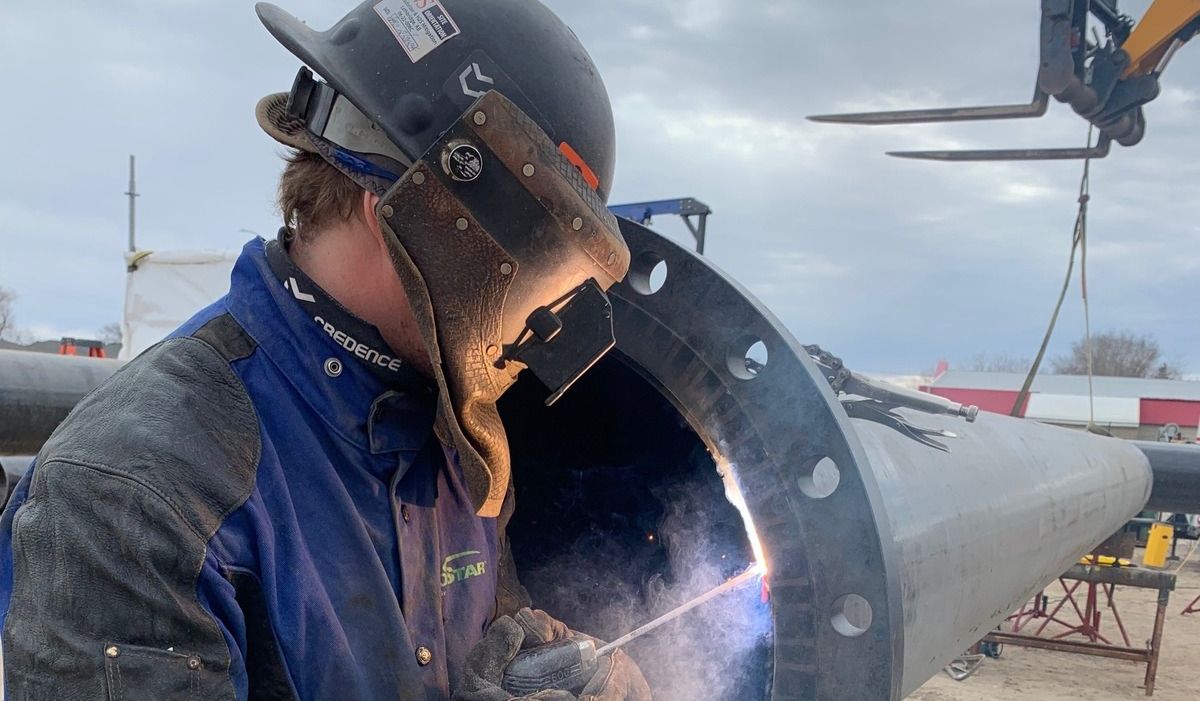
Industrial piping installation involves more than connecting individual components. It requires accurate measurements, proper alignment, material verification, skilled workmanship, and coordination with surrounding equipment and structures.
Incorrect installation can affect system performance, increase maintenance requirements, and create safety concerns.
Credence Construction Ltd. provides industrial construction and mechanical installation capabilities across Saskatchewan, Alberta, Manitoba, and Western Ontario. Its skilled trades include pipefitters, millwrights, and CWB-certified welders, supporting industrial construction, maintenance, and equipment installation projects.
Our industrial construction solutions bring multiple trades together to support complex project requirements.
You can also explore our recent guide on Types of Structural Steel Shapes to understand the structural components that may form part of industrial facility construction.
Frequently Asked Questions About Types of Pipe Fittings
1. What are the five main types of pipe fittings?
The five commonly used categories covered in this guide are elbows, tees, reducers, flanges, and valves. Each serves a different purpose, including changing flow direction, creating branches, connecting different pipe sizes, joining components, and controlling flow.
2. What is the difference between a pipe elbow and a pipe tee?
An elbow changes the direction of a pipeline, usually by 45 or 90 degrees. A tee creates a branch connection, allowing a pipeline to divide or receive flow from another line.
3. What is the purpose of a pipe reducer?
A pipe reducer connects pipes with different diameters. It helps transition between pipe sizes while accommodating the flow and installation requirements of the system.
4. Why are flanges used in industrial piping?
Flanges provide bolted connections between pipes, valves, pumps, and equipment. They allow sections to be disconnected for maintenance, inspection, and replacement.
5. Which pipe fitting is best for controlling fluid flow?
The appropriate valve depends on the application. Ball valves are commonly used for isolation, globe valves for flow regulation, and butterfly valves for compact flow control applications.
6. How do you select the correct industrial pipe fitting?
Consider operating pressure, temperature, pipe dimensions, material compatibility, fluid characteristics, connection type, and applicable engineering specifications. For critical applications, selection should be reviewed by a qualified piping engineer.
Final Thoughts
Understanding the different types of pipe fittings helps industrial teams make better decisions about piping design, installation, and maintenance.
Elbows manage directional changes, tees create branches, reducers connect different pipe sizes, flanges provide removable connections, and valves control flow. Each component plays an important role in maintaining a functional and dependable industrial piping system.
However, the real difference comes from selecting compatible components and ensuring they are installed correctly.
Planning an industrial piping installation, equipment upgrade, or maintenance project in Saskatchewan or Western Canada?
Contact Credence Construction Ltd. at 306-786-7000 to discuss your industrial construction and mechanical installation requirements.
Visit Credence Group to connect with our team.