
Construction Technology in Canada: Trends Shaping Industrial Construction in 2025
The construction industry is changing faster than ever, and nowhere is this transformation more visible than in Canada’s industrial construction sector. As industries expand, mines modernize, and new infrastructure projects roll out across Saskatchewan, Alberta, and the rest of the country, technology has become the driving force behind safer, faster, and more efficient project delivery.
In 2025, construction technology in Canada is more than just a buzzword — it’s becoming the backbone of everything from industrial maintenance to scaffolding, millwrighting, fabrication, and greenfield projects. Companies that adopt new technologies are gaining a major competitive advantage, especially in large-scale industrial environments.
Let’s explore the trends shaping the future of industrial construction across Canada this year.
1. Digital Twins and 3D Modeling Are Becoming Standard
Digital twin technology is no longer something reserved for mega-corporations. In 2025, mid-sized industrial contractors, fabrication shops, and engineering teams are using it to:
- Visualize industrial facilities
- Identify structural risks
- Plan shutdowns and maintenance
- Improve millwright alignment and equipment installation
- Speed up drafting and design workflows
A digital twin allows teams to “pre-build” a project digitally before lifting a single steel beam. In industrial construction, this helps reduce errors, avoid costly delays, and streamline communication between designers, engineers, and field crews.
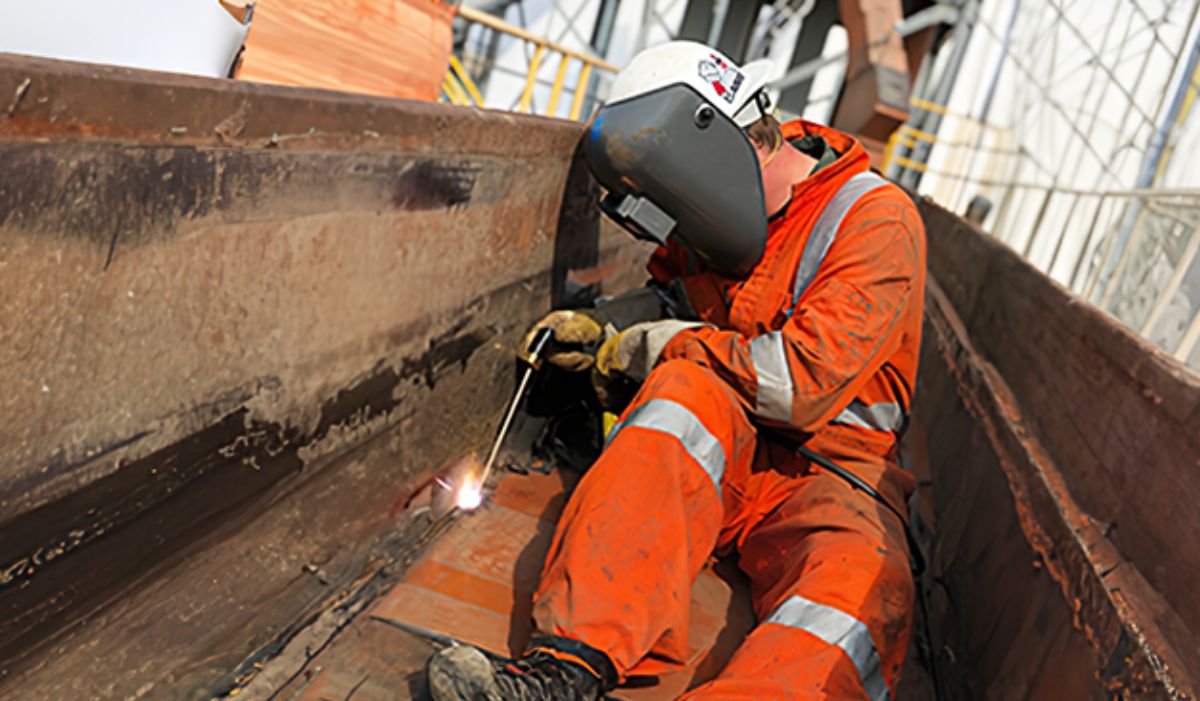
2. Automation and Robotics in Welding & Fabrication
Automation has become a major player in welding, steel fabrication, and equipment installation. In 2025, more fabrication shops and industrial contractors are using:
- Automated welding systems
- CNC cutting equipment
- Robotic fabrication arms
- Smart welding helmets with AR displays
This isn’t replacing skilled welders — it’s enhancing precision and improving consistency on large industrial projects. With the rising demand for structural steel, plant maintenance, and custom fabrication, automation ensures work gets done faster and more safely.
3. Modular & Off-Site Construction Gains Major Momentum
Industrial companies in mining, energy, power generation, and commercial development are turning to modular construction more than ever. In 2025, modular and prefabricated components allow contractors to:
- Reduce onsite congestion
- Improve safety by minimizing high-risk tasks
- Accelerate project schedules
- Reduce costs
- Improve quality control
For industrial facilities, modular units can include everything from electrical rooms to conveyor systems, pipe racks, equipment foundations, and even full structural assemblies.
This trend is especially strong in Saskatchewan and Alberta, where remote-site projects benefit from faster setup.
4. Advanced Scaffolding Systems Improve Safety & Productivity
As industrial maintenance and commercial construction scale up across Canada, new scaffolding technologies are transforming the way crews work.
In 2025, key innovations include:
- Smart scaffolding with digital load monitoring
- Modular ringlock systems for faster assembly
- 3D scaffolding design for safer planning
- RFID tags for tracking components
- Software that predicts scaffold load and stress
These advancements reduce time on-site, improve worker safety, and minimize unexpected project delays.
5. AI-Powered Project Planning and Predictive Maintenance
AI is reshaping how industrial construction companies plan, manage, and maintain facilities. Artificial intelligence can now:
- Predict equipment failure before it happens
- Estimate project timelines more accurately
- Identify material shortages
- Reduce cost overruns
- Optimize preventive maintenance schedules
- Analyze safety risks
For industrial sites with heavy machinery, conveyors, rotating equipment, and complex maintenance needs, AI-driven tools are becoming essential.
6. Drones Are Everywhere — and They’re Saving Time and Money
Drones have become one of the most valuable tools in construction technology in Canada. In 2025, they’re used for:
- Site surveying and mapping
- Progress tracking
- Structural inspections
- Scaffolding oversight
- Roof and building envelope checks
- High-angle inspections without lifts or scaffolding
For industrial contractors, drones reduce risk by keeping workers away from hazardous heights while giving engineers accurate data quickly.
7. Sustainable Construction Technology Is Now a Requirement — Not a Trend
Industrial and commercial projects across Canada are under growing pressure to reduce emissions, improve energy efficiency, and use environmentally responsible materials.
Technologies driving sustainability in 2025 include:
- Energy-efficient structural steel solutions
- Low-carbon fabrication processes
- Electric construction equipment
- Recyclable scaffold materials
- Smart building systems
- Automated waste reduction tools
Sustainability isn’t just a selling point — it’s becoming a requirement for industrial facilities, especially in mining, manufacturing, and large commercial developments.
8. Wearable Safety Technology Improves Worker Protection
Worker safety is at the heart of industrial construction, and technology is pushing standards higher. In 2025, crews across Canada are using:
- Smart helmets with sensors
- Wearable fall detection systems
- GPS-enabled safety tags
- Real-time fatigue monitoring
- Augmented reality safety training
These tools reduce injuries, enhance emergency response, and create safer work environments across scaffolding, steel erection, welding, and millwrighting operations.
9. Cloud-Based Project Management Is Transforming Collaboration
Industrial construction involves many moving parts — fabricators, engineers, millwrights, welders, scaffolders, and maintenance teams. Cloud platforms make it easier for everyone to stay aligned.
In 2025, cloud tech enables:
- Real-time project updates
- Mobile access to drawings and plans
- Instant communication between field and office
- Faster decision-making
- Better resource management
The result? Fewer mistakes and smoother workflows.
Final Thoughts: The Future of Industrial Construction in Canada Is Tech-Driven
From AI to robotics, from digital twins to smart scaffolding, construction technology in Canada is reshaping how industrial and commercial projects are planned, built, and maintained.
As competition grows and industries evolve, companies that embrace these innovations will lead the market — delivering safer, faster, and more cost-effective results.
Whether it’s fabrication, welding, millwrighting, scaffolding, or full-scale industrial construction, technology is now the foundation of modern project success.