Greenfield Construction in Saskatchewan: What Industrial Project Owners Need to Know Before Breaking Ground
Starting a new industrial facility from scratch is one of the most exciting decisions a company can make. It is also one of the most unforgiving.
Unlike expanding or upgrading an existing site, greenfield construction gives you a blank canvas. No legacy infrastructure to work around. No existing operations to schedule construction beside. Just raw land, a set of project objectives, and the full weight of every decision sitting squarely in front of you.
That freedom is exactly why greenfield projects go wrong more often than they should. When you are building around an existing facility, the existing structure acts as a natural constraint on bad decisions. On a greenfield site, there is nothing to catch a poor layout choice, an undersized electrical service, or a foundation design that did not account for the actual soil conditions at that specific location. Those decisions get made once, they get built into the ground, and they live with the facility for decades.
At Credence Construction Ltd., our team has delivered greenfield industrial construction projects across Saskatchewan and Alberta for agricultural operators, mining companies, and fertilizer producers. What we see consistently is that the facilities that get built right are the ones where the hard conversations happened early — before the design was finalized, before the budget was locked, and before the first subgrade was cut.
What Is Greenfield Construction for Industrial Facilities?
Greenfield construction means building a completely new industrial facility on previously undeveloped land — no existing structures, no existing utilities, no existing infrastructure of any kind. Everything is designed and built from scratch.
For industrial operators in Saskatchewan, greenfield projects typically involve new grain handling or storage complexes, new mining support facilities, new fertilizer or agricultural processing buildings, or new equipment platforms on land that has never been developed for industrial use before.
This is different from brownfield construction — where you build within or alongside an existing facility that is already operating. Brownfield projects work within existing constraints. Greenfield projects set their own constraints — which is both the opportunity and the responsibility that makes them more complex than they first appear.
What Greenfield Construction Actually Means for Industrial Facilities
Greenfield construction refers to building on previously undeveloped land with no existing infrastructure. For industrial purposes in Saskatchewan, that typically means a completely new processing facility, a new grain handling or storage complex, a new mining support structure, or a new agricultural production building on a site that has not been previously developed for industrial use.
This is a fundamentally different scope from brownfield construction — where you build within or alongside an operating facility — and it demands a different planning approach from the start. There are no existing building permits to extend, no existing utility connections to tap into, no existing drainage patterns to work within. Everything gets designed and built from zero.
That is both the opportunity and the risk. Done right, a greenfield facility can be designed exactly for its purpose — optimized layout, right-sized infrastructure, room to grow. Done wrong, it becomes a facility that the operations team spends the next twenty years working around.
Why Saskatchewan Greenfield Projects Carry Specific Risks
Prairie provinces have a distinct set of conditions that make greenfield industrial construction more complex than it looks from a project management perspective.
Soil and frost conditions vary enormously across Saskatchewan. The clay-heavy soils in some regions behave very differently from the lighter sandy loam soils found elsewhere in the province. A foundation design that works well for one site may be completely wrong for a site twenty kilometres away. Without a proper geotechnical investigation — actual bore holes, laboratory testing, and an engineered foundation recommendation — you are guessing at one of the most important inputs to the entire structural design.
Wind and snow loads in open Prairie locations exceed what most contractors from urban or southern markets design for by default. A processing building or storage structure on an exposed Saskatchewan site needs to be designed for the actual wind exposure of that specific location — not a generic Prairie average. Getting this wrong shows up in structural failures, roof uplift issues, and cladding problems that are expensive to fix after the fact.
Utility access on greenfield sites outside established industrial parks can also be a significant planning challenge. Natural gas, electrical service, water, and sewage connections all need to be engineered and costed as part of the project — not assumed. On remote agricultural or mining sites, some of these services may need to be self-supplied, which has major implications for facility design and capital cost.
The Pre-Construction Decisions That Cannot Be Undone
Every greenfield construction project has a set of decisions that can be changed later only at enormous cost — or cannot be changed at all. Getting these right in the planning phase is worth more than any amount of execution excellence during construction.
Site layout and orientation is the one that haunts facility managers longest when it gets wrong. The relationship between the main process building, truck access routes, storage areas, utilities infrastructure, and future expansion space needs to be worked out on paper — with real truck turning radii, real equipment clearances, and real thought about what this site might need to accommodate in ten or fifteen years. A site that was laid out without thinking about future expansion forces the next phase of construction to work around decisions that were made without it in mind.
Foundation design for the actual site conditions is where cutting corners in the pre-construction phase creates the most expensive problems. Credence’s Drafting and Design team works through foundation design documentation that reflects verified field conditions — actual geotechnical data, confirmed utility locations, and real site measurements — not assumptions carried over from a different project on a different site.
Structural steel specifications for the primary building and process structures need to be established early because they drive material procurement timelines. In the current market — where steel tariffs have extended lead times on certain steel sections and grades — waiting until the design is nearly complete to start the procurement conversation is a mistake that shows up as schedule delays later. We covered the direct impact of steel tariffs on construction costs in Canada in a recent article — the procurement timing decisions on a greenfield project are more important in 2026 than they have been in years.
Permit and regulatory requirements for greenfield industrial construction in Saskatchewan include building permits from the relevant municipal authority, provincial environmental assessments where applicable, Saskatchewan OH&S compliance for the construction phase, and in some cases federal regulatory requirements depending on the industry sector. These processes take time — often more time than project owners expect — and they need to start early in the planning phase, not after the design is complete.
How to Structure the Build for a Successful Greenfield Project
The most successful greenfield industrial construction projects Credence has been involved with share one consistent characteristic — the contractor was engaged during the design and engineering phase, not at tender.
This matters because the contractor who builds a greenfield facility needs to understand the site before they can give you reliable input on constructability. Site access for heavy equipment, laydown areas for prefabricated steel components, crane positioning for major lifts, temporary facility requirements for the construction crew — none of these can be properly planned from a drawing. They require someone who has built on similar Prairie sites to look at the specific conditions and identify the issues before construction starts.
Early contractor engagement also enables better integration between design and fabrication. At Credence, our Steel Fabrication and Drafting and Design capabilities work together — which means structural steel components can be designed with our fabrication shop’s capabilities in mind, shop drawings can be reviewed and approved as design progresses rather than in a batch at the end, and material can be ordered as soon as specifications are confirmed rather than waiting for the full design to be complete.
The Construction Solutions team that executes the build brings millwrights, ironworkers, welders, scaffolders, and carpenters under a single management structure. On a greenfield site where there is no existing infrastructure to constrain the sequence of work, having that multi-trade capability under one roof means the construction sequence can be optimized for efficiency rather than designed around the availability of separate subcontractors.
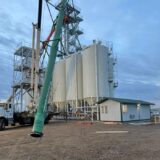
Our Fertilizer Site Construction and New Build Grain Terminal projects are both examples of greenfield agricultural and industrial construction where the integration of design, fabrication, and construction under a single team directly affected project delivery. These are not theoretical capabilities — they are the way we actually work.
What to Confirm Before You Award a Greenfield Construction Contract
Greenfield projects represent significant capital commitments — the wrong contractor choice on a new build is harder to recover from than on a renovation or expansion where existing infrastructure provides some fallback. Before you award a greenfield industrial construction contract in Saskatchewan, these questions are worth pressing on.
Has the contractor built on undeveloped Prairie sites before — not just on established industrial parks or urban sites? Do they have in-house drafting and engineering documentation capability, or are they relying on a separate design firm that they will need to coordinate with throughout the project? Can they demonstrate CWB-certified fabrication capability for the structural steel scope? And how do they propose to handle the pre-construction phase — site investigation, geotechnical review, permit applications, and design coordination — as an integrated service rather than a series of separate engagements?
A contractor who treats greenfield construction as a straightforward build-to-drawings exercise has not done enough of it to understand what makes it different. The value in greenfield construction is not in the execution — it is in the thinking that happens before a single shovel hits the ground.
If you are planning a greenfield construction project in Saskatchewan or Alberta and want to talk through the pre-construction phase with a team that has delivered this work across the Prairies, connect with Credence early. The decisions made before ground is broken are always the ones that matter most.
Frequently Asked Questions About Greenfield Construction in Saskatchewan
Q1: How long does a greenfield industrial construction project take in Saskatchewan? Timeline varies significantly with project scope and complexity. A smaller agricultural processing facility on a prepared site can be completed in six to nine months from design through commissioning. A large-scale mining or fertilizer facility with significant infrastructure requirements typically takes eighteen to thirty-six months. The most important timeline factor is how early the contractor is engaged — pre-construction design, geotechnical investigation, permit applications, and material procurement all have lead times that compress rapidly as the construction start date approaches.
Q2: What permits are required for greenfield industrial construction in Saskatchewan?
Greenfield industrial construction in Saskatchewan typically requires a building permit from the relevant municipal or rural municipality authority, structural engineering stamped drawings meeting National Building Code requirements, environmental assessment or screening depending on project type and location, Saskatchewan OH&S compliance for the construction phase, and electrical permits for all electrical installations. Projects near waterways or on agricultural land may require additional provincial or federal approvals. Engaging your contractor and a permit expeditor early in the planning phase is the most reliable way to avoid permit-related schedule delays.
Q3: What is the difference between greenfield and brownfield construction for industrial facilities?
Greenfield construction builds on previously undeveloped land with no existing infrastructure — everything from foundations and utilities to access roads and drainage is designed and built from scratch. Brownfield construction builds on or alongside previously developed land — working within or around existing structures, utilities, and operational constraints. Greenfield projects offer more design freedom but require more upfront infrastructure investment. Brownfield projects work within existing constraints but benefit from infrastructure that is already in place.
Q4: What geotechnical work is required before greenfield construction starts in Saskatchewan?
A geotechnical investigation — including bore holes, soil testing, and an engineered foundation recommendation — is required before structural foundations can be designed for any greenfield industrial site in Saskatchewan. Saskatchewan’s soil conditions vary significantly across the province. Clay-heavy soils in some regions behave very differently from lighter sandy loam soils found elsewhere. A foundation design based on assumed soil conditions rather than tested ones is one of the most expensive mistakes a greenfield project can make.
Q5: How do steel tariffs affect greenfield construction costs in Saskatchewan in 2026?
Steel tariffs introduced in 2025 and expanded in December 2025 have increased structural steel costs and extended material lead times for greenfield industrial projects across Canada. For Saskatchewan greenfield builds, this means structural steel specifications need to be locked earlier in the design process — and material procurement needs to start as soon as specifications are confirmed rather than waiting for the full design to be complete. Engaging your contractor during the design phase rather than at tender is the most effective way to manage steel procurement timing on a greenfield project in the current market.