How to Choose an Industrial Contractor in Saskatchewan: What to Look For Before You Sign
Finding a reliable industrial contractor in Saskatchewan is not as straightforward as it might seem. Whether you are planning a new facility build, a scheduled shutdown, or an ongoing maintenance contract, the contractor you choose will either make or break the project.
Saskatchewan’s industrial sector is demanding. With major operations running across agriculture, potash mining, grain handling, and oil and gas, project owners cannot afford delays, safety incidents, or rework caused by an underqualified crew. The stakes are high, timelines are tight, and budget overruns can be devastating.
So how do you sort through the options and find an industrial construction company in Saskatchewan that actually delivers? Here is what to look for before you sign anything.
1. Verify Their Safety Certifications — Starting with COR
Safety is non-negotiable on industrial job sites, and certifications are the fastest way to gauge a contractor’s commitment to it.
The most important one to ask for in Saskatchewan is COR certification — the Certificate of Recognition. This certification, administered through the Saskatchewan Construction Safety Association (SCSA), confirms that the contractor has a functioning and audited safety management system in place. It is not a self-declaration. A third-party audit verifies that the system actually works.
Why does this matter to you? Because COR-certified contractors have documented procedures for hazard identification, incident investigation, and worker training. They are not making it up on-site. Their crews know what to do before they show up.
Beyond COR, ask whether the contractor is pre-qualified with industry compliance programs like ISNetworld or Avetta. These are third-party platforms that large industrial operators — especially in mining and agriculture — use to vet their contractors before granting site access. If your contractor is not pre-qualified, they may not even be eligible to step onto your facility.
A contractor who cannot show you both COR certification and compliance program membership is a risk you do not need to take.
2. Look for Multi-Trade Capability Under One Roof
One of the most overlooked criteria when hiring an industrial contractor in Saskatchewan is trade coverage. Many smaller contractors specialise in one or two trades, which means you end up managing multiple subcontractors for a single project.
That creates coordination headaches, finger-pointing when things go wrong, and gaps in accountability.
The better approach is to work with a multi-trade industrial contractor who can bring the full range of skilled labour to your project. On a typical industrial build or maintenance project in Saskatchewan, you might need:
- Millwrights for equipment installation, alignment, and mechanical work
- Ironworkers for structural steel erection and connections
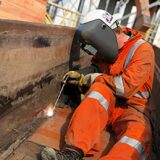
- CWB certified welders for structural and pipe welding
- Scaffolders for safe elevated access across all trades
- Carpenters for forming, framing, and finishing work
- Pipefitters for process piping and utility systems
When these trades are all employed directly by the contractor — not subcontracted out — you get tighter coordination, clearer communication, and one point of accountability from start to finish.
Ask any contractor you are evaluating: how many of these trades do you employ directly? The answer tells you a lot about how your project will actually run.
3. Assess Their Experience in Your Specific Industry
Industrial construction is not a single category. A contractor who excels at commercial builds or residential projects may struggle badly on an agricultural grain facility or a potash mine site. The equipment, the site conditions, the safety protocols, and the tolerances are completely different.
When evaluating an industrial construction company in Saskatchewan, look specifically at experience in your sector:
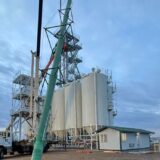
Agriculture and grain handling: Projects in this space often involve structural steel for conveyors, hoppers, and material handling systems. The contractor needs to understand how this equipment functions — not just how to build around it.
Mining and resource extraction: Saskatchewan’s booming potash sector, along with uranium and coal operations, requires contractors who can work safely in active mine environments. They need to understand site-specific access requirements, confined space work, and the logistics of working alongside ongoing production.
Oil and gas and heavy industrial: Process piping, pressure equipment, and industrial maintenance in these environments demand specific knowledge of applicable codes and the ability to coordinate with operations teams to minimise downtime.
Ask for project references that are genuinely relevant to your industry. A portfolio that shows a mix of greenfield builds, planned shutdowns, and emergency maintenance work is a strong indicator of well-rounded experience.
4. Understand How They Handle Shutdowns and Emergency Breakdowns
Scheduled shutdowns and unplanned emergency breakdowns are two of the most demanding scenarios in industrial construction. A contractor who handles them well is worth their weight in gold.
For planned shutdowns, the key is preparation. A capable contractor will have a clearly documented scope of work before the shutdown begins, the right trades mobilised and on-site before the clock starts, and the discipline to work efficiently under the time pressure of a facility that is not producing.
Ask the contractor how they typically plan for shutdowns. What is their mobilisation process? How do they handle scope changes discovered mid-shutdown? Can they provide a fixed price or a not-to-exceed budget?
For emergency breakdowns, the question is simple: how fast can you get here, and can you get the job done around the clock until the facility is back online? Not every contractor has the bench strength to mobilise on short notice. Ask directly what their on-call process looks like and whether they have responded to emergency breakdowns in the past.
A contractor who talks vaguely about “doing their best” when equipment fails is not the same as one who has a documented emergency response process and can show you examples of where they delivered on it.
5. Ask About Their Approach to Drafting, Design, and Pre-Construction
Many project owners do not realise that the right industrial contractor can add value long before a single bolt is tightened. Contractors who offer drafting and design services in-house — or who work closely with third-party engineers — can help you develop the scope of work properly before construction begins.
This matters because scope problems discovered during design are cheap to fix. Scope problems discovered mid-construction are expensive and disruptive.
Look for a contractor who will involve you in the design process, walk you through material handling layouts or structural steel configurations, and require your sign-off before moving forward. That level of process discipline usually translates directly to how they run the construction phase as well.
6. Check References — And Ask the Right Questions
References are standard practice, but most people ask the wrong questions. Instead of “how was working with them,” try asking:
- Did they complete the project on time and on budget?
- How did they handle unexpected site conditions or scope changes?
- How did their safety performance compare to other contractors you have used?
- Would you hire them again for a larger or more complex project?
- How was their communication during the project?
One strong reference from a comparable industrial project in Saskatchewan is worth more than five references from unrelated work. Pay attention to specifics. Vague praise is easy to give. Concrete project outcomes — delivered on time, within budget, no recordable safety incidents — are what you want to hear.
7. Do Not Just Look at Price — Look at Total Project Value
In industrial construction, the lowest bid is rarely the best value. A contractor who prices aggressively to win the work may cut corners on safety, bring under-qualified tradespeople, or fail to account for scope items that will come back as change orders.
When comparing contractors, look beyond the number on the page. Consider:
- What is included and what is excluded?
- How do they handle change orders — are rates pre-agreed or open-ended?
- What are their payment terms and how do they manage project cash flow?
- What warranties or guarantees do they offer on their work?
A contractor who is slightly higher in price but brings COR certification, a multi-trade crew, verified references, and a structured approach to project management will almost always deliver better total value than the cheapest option on the list.
Working with an Industrial Contractor in Saskatchewan: What Good Looks Like
To put it simply, a great industrial contractor in Saskatchewan shows up prepared, works safely, communicates clearly, and finishes what they start. They bring the trades, the certifications, and the project experience that your specific operation requires.
They do not sub everything out, disappear between site visits, or present you with surprise invoices at the end. They treat your facility, your team, and your timeline with the same seriousness you do.
At Credence Construction, we have built our reputation across Saskatchewan’s agricultural and mining industries by doing exactly that. Our industrial construction services cover everything from greenfield builds to planned shutdowns, emergency breakdowns, and ongoing repair and maintenance contracts. Our crew includes CWB certified welders, millwrights, ironworkers, pipefitters, carpenters, and scaffolders — all employed directly, all working under our COR certified safety system.
We also offer drafting and design services to help you plan your project properly before the first tool comes out of the truck.
If you are planning an industrial construction project in Saskatchewan and want to talk through your requirements, contact our team. We are based in Yorkton, SK and work across Western Canada.
Frequently Asked Questions
- What certifications should an industrial contractor in Saskatchewan have?
At minimum, look for COR certification from the SCSA and pre-qualification with compliance programs like ISNetworld or Avetta. CWB certification for welding and trade certifications for millwrights, ironworkers, and scaffolders are also important depending on your project scope.
2. What is the difference between a general contractor and an industrial contractor?
A general contractor typically manages residential or commercial construction. An industrial contractor specialises in heavy industrial environments — mining, agriculture, oil and gas — and employs the specific trades, safety systems, and technical knowledge those environments require.
3. How do I know if a contractor can handle a planned shutdown?
Ask for specific examples of shutdowns they have managed, including the scope, the timeline, the number of trades involved, and the outcome. A contractor with real shutdown experience will be able to walk you through their planning and mobilisation process clearly.
4. Is it better to use a multi-trade industrial contractor or manage multiple subcontractors separately?
In most cases, a multi-trade contractor gives you better coordination, clearer accountability, and fewer gaps in communication. Managing multiple subcontractors separately adds project management burden and increases the risk of delays caused by trade handoffs.
5. Does Credence Construction work outside of Yorkton, Saskatchewan?
Yes. Credence Construction serves clients across Saskatchewan and the broader Canadian prairie provinces, including projects in Regina, Saskatoon, Prince Albert, Estevan, Lloydminster, and Alberta.