
Industrial Projects in Saskatchewan: How to Plan, Execute and Deliver Without Losing Control
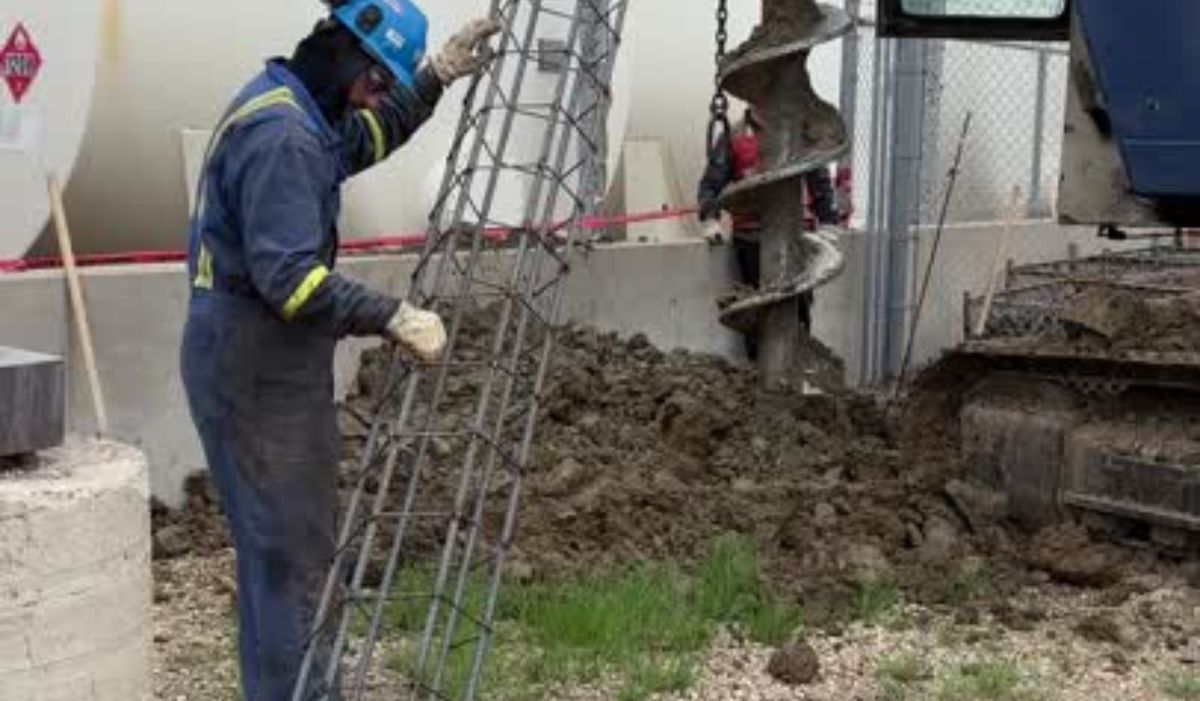
There is a particular kind of pressure that comes with running industrial projects in Saskatchewan. The weather does not negotiate. Your production schedule does not pause while a contractor figures out trade coordination. And when something goes sideways on a live mining site or an operating grain terminal, the cost of getting it wrong lands squarely on the operations manager sitting at the centre of it all.
Most industrial projects do not fail because of bad intentions. They fail because the planning was too thin, the contractor was not equipped to handle the complexity, or the decisions that should have been made on paper got made in the field instead — at exactly the moment when changing course is most expensive.
At Credence Construction Ltd., we have delivered industrial projects across Saskatchewan, Alberta, Manitoba, and Western Ontario for clients in agriculture, mining, and heavy industry. This article is a straight look at what it actually takes to plan, execute, and deliver industrial projects in Western Canada without losing control of your schedule, your budget, or your site.
Why Industrial Projects in Saskatchewan Come With Unique Challenges
Before getting into the how, it is worth being honest about the why — because industrial projects on the Canadian Prairies operate inside a set of constraints that make them genuinely different from commercial construction in a major urban centre.
Seasonal windows are real and unforgiving. Saskatchewan winters limit outdoor structural work, equipment lifts, and concrete pours. If your project timeline does not account for seasonal realities from the planning stage, you will feel it when spring comes and your schedule is already three months behind before a single piece of steel goes up.
Remote site access adds complexity. Many of the mining and agricultural facilities Credence works at are not walking distance from a supply yard or a trade shop. Mobilizing crews, delivering fabricated steel, and coordinating equipment to remote Prairie locations requires logistical planning that urban contractors are simply not set up for.
Operating facilities cannot stop for your project. A grain terminal processing canola during harvest season or a potash mine running three shifts does not have the luxury of shutting down completely because construction is underway. Industrial projects in these environments have to be planned and executed around live operations — which requires a level of coordination and safety planning that goes far beyond what a typical commercial build demands.
These are not reasons to be intimidated by the scope of your project. They are reasons to choose your contractor carefully and build your project plan with eyes open.
Phase 1 — Pre-Construction: Where Industrial Projects Are Actually Won or Lost
The decisions made before a single crew mobilizes to site determine more about the outcome of an industrial project than anything that happens during construction. This is not an exaggeration. It is the reality that experienced project owners in Saskatchewan’s agriculture and mining sectors know from hard-earned experience.
Scope definition has to be precise. Vague scopes produce vague bids, which produce budget surprises mid-project. Before you invite contractors to price your work, your scope document should define exactly what is being built, what existing infrastructure it connects to, what the operational constraints are during construction, and what the handover requirements look like at completion.
Drafting and design cannot be rushed. Every structural steel component, equipment platform, hopper, or conveyance structure that will be fabricated offsite needs accurate, reviewed, and approved engineering documentation before fabrication begins. At Credence, our Drafting and Design team works directly with our fabrication and site crews so that the drawings reflect real field conditions — not just theoretical specifications. Getting this right at the front end eliminates the rework, delays, and cost overruns that come from discovering dimensional errors after components are already built.
Contractor prequalification matters more than price. The cheapest bid on an industrial project in Saskatchewan is almost never the best value. What you are actually buying when you hire an industrial contractor is their ability to manage complexity — multiple trades working simultaneously, safety compliance in a live operating environment, logistics across Prairie distances, and communication with your operations team when conditions change. A contractor who cannot demonstrate competence in all of these areas will cost you far more than the difference between their bid and the next one up.
Phase 2 — Execution: Managing Complexity on a Live Industrial Site
Once construction begins, the quality of your project plan gets tested in real time. Here is what separates industrial projects that stay on track from ones that don’t.
Trade coordination is the hardest part. On a complex industrial project, you might have millwrights installing equipment, ironworkers erecting structural steel, welders working on process piping, and scaffolders building access platforms — all in the same physical footprint, often on the same day. Managing the sequence of that work, the safety interactions between trades, and the dependencies between tasks requires a project manager who has done this before and a contractor structure that keeps all of those trades under one accountable roof.
This is one of the genuine advantages Credence brings to industrial projects in Saskatchewan. Our Construction Solutions team operates as a multi-trade contractor — millwrights, ironworkers, welders, scaffolders, and carpenters working under a single project management structure. When a decision needs to be made about trade sequencing or a scope change mid-project, it gets made internally and communicated immediately — not bounced between three different subcontractors who all have competing priorities.
Industrial scaffolding is a project management tool, not just an access solution. The way scaffolding is designed and positioned on an industrial site directly affects how efficiently every other trade can do their work. Poorly planned scaffold access slows down steel erection, delays equipment installation, and creates safety risks that compound over time. Credence’s Industrial Scaffolding team works as part of the broader project plan — not as an afterthought — so that access is ready when each trade needs it, not two days after.
Steel fabrication quality determines installation speed. Components that arrive on site accurately fabricated to approved shop drawings go up quickly. Components with dimensional errors, missing connection details, or incorrect material grades create field problems that ripple across your entire schedule. Our Steel Fabrication shop is CWB certified, which means every structural component is fabricated to a documented, audited standard before it leaves our facility. What arrives on your site fits — because we verified it would before it was loaded on the truck.
Phase 3 — Handover and Beyond: Why the End of Construction Is Not the End of the Project
Industrial projects do not truly finish at mechanical completion. The handover phase — commissioning, documentation, and transitioning back to normal operations — is where a lot of value either gets captured or lost.
As-built documentation needs to be complete and accurate. When construction is done, your facility maintenance team needs to know exactly what was built, where it was built, and how it connects to existing systems. Incomplete or inaccurate as-built drawings create long-term maintenance problems that compound over years of operation.
Planned maintenance contracts protect your capital investment. The most cost-effective time to establish a maintenance relationship with your industrial contractor is immediately after project completion — when that contractor understands your facility better than anyone. Credence’s Repair and Maintenance team works with clients across Saskatchewan and Alberta on both planned preventive maintenance programs and emergency breakdown response, so the investment you made in your facility keeps performing the way it was designed to.
What the Best Industrial Project Owners in Saskatchewan Do Differently
After years of delivering industrial projects across the Prairies, a pattern is clear. The project owners who consistently get the best outcomes share a few habits that separate them from the ones who end up managing crises.
They engage their contractor in the pre-construction phase, not just at tender. They insist on a single point of accountability for all trades on site. They build seasonal and logistical realities into their project schedule from day one. They verify contractor safety credentials — COR certification, WCB standing, experience in live operating environments — before price is ever discussed. And they plan for maintenance from the start, not as an afterthought once the project is complete.
None of these are complicated. All of them make an enormous difference.
If you are planning industrial projects in Saskatchewan and want to talk through your specific scope, timeline, and requirements with a multi-trade contractor who has delivered this kind of work across Western Canada, connect with the Credence team early. The conversations that happen before construction begins are always the most valuable ones.
Frequently Asked Questions About Industrial Projects in Saskatchewan
Q1: What types of industrial projects does Credence Construction handle in Saskatchewan? Credence handles a wide range of industrial projects across Saskatchewan including structural steel construction, steel fabrication and installation, equipment platforms, grain handling and storage facility builds, mining structure construction, industrial scaffolding, plant shutdowns and turnaround maintenance, and facility upgrades. Our multi-trade capability means a single Credence crew can cover millwright, ironworker, welder, scaffolder, and carpenter scopes under one project management structure.
Q2: How far in advance should I start planning an industrial construction project in Saskatchewan? For large-scale industrial projects, we recommend engaging your contractor a minimum of three to six months before your target construction start date. This allows adequate time for scope finalization, drafting and design, shop drawing preparation and approval, material procurement, and crew mobilization planning. Projects that try to compress this timeline almost always pay for it through delays and cost overruns during construction.
Q3: How do Saskatchewan’s winters affect industrial project timelines? Prairie winters significantly affect outdoor structural work, concrete placement, and equipment mobilization. Experienced industrial contractors in Saskatchewan build seasonal windows into project schedules from the planning stage. At Credence, we account for weather-sensitive activities early and sequence work to protect your critical path through winter months wherever possible.
Q4: Can Credence handle industrial projects in remote locations across Saskatchewan and Alberta? Yes. Credence has extensive experience mobilizing to remote mining and agricultural locations across Saskatchewan, Alberta, Manitoba, and Western Ontario. Our crews are self-sufficient and our project management team handles all logistics including equipment transport, crew accommodation, and material delivery to remote sites.
Q5: What is the difference between a multi-trade contractor and a general contractor for industrial projects? A general contractor typically manages subcontractors from multiple companies to deliver different scopes of work. A multi-trade industrial contractor like Credence employs the tradespeople directly — millwrights, ironworkers, welders, scaffolders, and carpenters are all Credence employees working under a single project management structure. This eliminates the communication gaps, accountability confusion, and scheduling conflicts that arise when multiple subcontractors are working in the same space with competing priorities.
Q6: Does Credence Construction offer maintenance services after an industrial project is complete? Yes. Credence provides both planned preventive maintenance programs and emergency breakdown response for industrial facilities across Saskatchewan and Alberta. Many clients establish a maintenance relationship with Credence immediately after project completion, when our team’s familiarity with the facility is at its highest.
1 Comment
Comments are closed.