
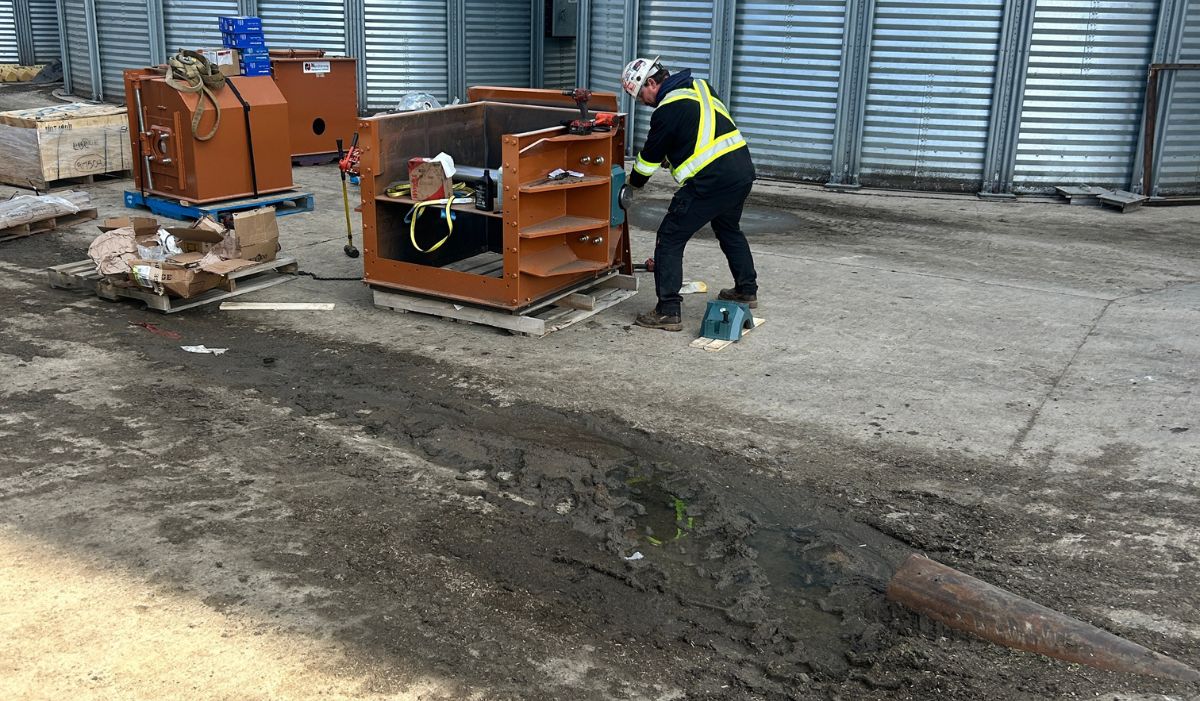
What Is Structural Integrity and Why It Matters in Industrial Construction?
At its core, structural integrity refers to the ability of a structure — whether it’s a building, industrial plant, or structural component — to support its intended loads and perform its function safely and reliably over time. In simple terms: a structure with good structural integrity will not deform, crack, buckle, or collapse under the stresses it is designed to endure.
Structural integrity is not just about initial design and build quality; it involves ensuring that materials, geometry, environmental factors, and usage all align to enable a structure to sustain its loads — including its own weight — without failure.
In the context of industrial construction — factories, warehouses, plants, heavy-equipment facilities — structural integrity is critical. These facilities often carry heavy loads, house heavy machinery, handle dynamic forces, and operate under demanding environmental conditions.
Why Structural Integrity Matters in Industrial Construction
Safety of People and Assets
Industrial facilities often house machinery, heavy equipment, storage racks loaded with materials, and frequent material handling operations. If structural integrity is compromised, the risk of catastrophic failure — collapse, structural fracture, excessive deformation — increases significantly. That may lead to injuries, fatalities, damaged equipment, or loss of entire inventory.
Put simply: structural integrity protects lives, property, and business continuity.
Longevity, Durability, and Cost-Effectiveness
Industrial buildings and assets are long-term investments. A structure built with strong design, appropriate materials, and proper maintenance can serve for decades. Ensuring structural integrity from the start reduces long-term maintenance costs, avoids premature deterioration, and prolongs the facility’s service life.
In contrast, neglecting structural integrity often leads to frequent repairs, unplanned downtime, and increased operational costs over time.
Compliance, Responsibility & Reliability
Industrial construction is often subject to building codes, industry standards, and safety regulations. Maintaining structural integrity ensures compliance with these requirements. Moreover, for stakeholders — investors, operators, employees — a structurally sound facility reflects reliability, professionalism, and long-term accountability.
In heavily regulated sectors (manufacturing, energy, chemicals, heavy-industry), meeting structural integrity standards is not optional — it’s mandatory to avoid legal, safety, and financial risks.
Risk Mitigation — Preventing Catastrophic Failures
Structural failures rarely happen without warning. Most failures result from a combination of factors: material fatigue, environmental stress (corrosion, temperature, chemical exposure), design flaws, improper construction practices, or misuse/overload over time.
For industrial facilities — where consequences of failure can be severe (injury, downtime, major financial losses, environmental hazards) — ensuring structural integrity is a critical risk-mitigation strategy.
Common Threats to Structural Integrity in Industrial Settings
Achieving structural integrity is not a one-time job. Over a structure’s lifespan, several threats can undermine its stability if unchecked. Key threats include:
- Weak or Inappropriate Materials: Using substandard or unsuitable materials (steel, concrete, metal alloys) can compromise load-bearing capacity.
- Design or Geometric Flaws: Incorrect calculations — underestimating loads, ignoring dynamic stresses, neglecting safety factors — or poor geometry (e.g. weak joints, insufficient thickness) can make structures vulnerable.
- Fatigue, Wear, Corrosion & Environmental Effects: Over time, cycles of loading, exposure to moisture, chemicals, temperature changes, or corrosive environments can degrade materials, cause cracks or corrosion, reduce strength, and eventually lead to failure.
- Poor Construction or Workmanship: Even with good design and materials, flawed execution — substandard welds, deviation from specifications, improper connections — can trigger structural weakness.
- Operational Overload or Misuse: Industrial buildings often endure loads beyond static weight — heavy machinery vibrations, dynamic loads, unexpected loads. Without proper design margins, these can produce stress beyond what the structure was built for.
- Lack of Regular Inspection & Maintenance: Over years of operation, deterioration from wear, corrosion, fatigue may go unnoticed unless regular inspections are done; structural integrity can degrade silently until a critical failure occurs.
How Engineers Ensure Structural Integrity in Industrial Construction
To build and maintain structures that meet high standards of structural integrity, engineers and construction teams follow several best practices:
Proper Design & Analysis
Before breaking ground, engineers must model all expected loads — static loads (weight), dynamic loads (machinery vibrations, moving loads), environmental loads (wind, seismic, temperature, chemical exposure). The design must factor in safety margins and redundancies — so that even if one component fails, it does not trigger a total collapse.
Design tools and structural analysis, along with awareness of relevant codes/standards (load capacity, material strength, fatigue constraints), form the backbone of a robust structural integrity plan.
Material Selection & Quality Control
Choosing the right materials — with appropriate strength, toughness, corrosion resistance — is as important as design. Once materials are selected, they must undergo quality checks to ensure they meet specifications.
In industrial contexts, where loads are heavy and operating conditions harsh, material quality can make the difference between a safe building and a hazardous liability.
Inspection, Monitoring & Maintenance Throughout Life-Cycle
Structural integrity is not “set and forget.” Periodic inspection — possibly via non-destructive testing (NDT), structural health monitoring (sensors, fatigue/crack detection), visual checks — helps detect early signs of wear, corrosion, cracking or deformation.
When problems are detected, timely maintenance or repair avoids escalation — preventing small issues from becoming catastrophic failures.
Accounting for Environmental and Operational Factors
Industrial facilities often face harsh environments — corrosive chemicals, temperature extremes, heavy vibrations, dynamic loads. Engineers must anticipate these factors at the design stage, and ensure protective measures (corrosion-resistant materials, proper coatings, reinforcement, shock absorption, flexible joints, etc.) are built in.
By doing so, the structure remains robust even under demanding industrial conditions.
Why Structural Integrity Is Especially Critical in Industrial Construction (Compared to Residential/Commercial)
Industrial facilities face a set of unique challenges and demands that make structural integrity more critical than in typical residential or commercial buildings:
- Heavier Loads & Dynamic Stress: Machinery, storage racks loaded with heavy materials, moving equipment — all impose substantial and dynamic loads. A design that suffices for offices or homes may fail under industrial load.
- Harsh Environmental Conditions: Industrial settings may expose structures to chemicals, humidity, extreme temperatures, corrosive substances — conditions rarely seen in residential buildings.
- Complex Usage & Lifecycle: Industrial assets often operate decades under continuous use, with wear, maintenance, modifications, expansions — making ongoing structural integrity management essential.
- Higher Consequences of Failure: The cost of downtime, equipment damage, safety hazards, regulatory penalties, environmental damage — all escalate rapidly if structural integrity is compromised.
Thus, industrial construction demands more rigorous design, stricter quality control, frequent inspection and robust maintenance planning.
Real-World Impact of Ignoring Structural Integrity
History offers unfortunate examples of what happens when structural integrity is neglected. Buildings and industrial structures have collapsed — sometimes with little warning — due to poor design, substandard materials, flawed construction, or lack of maintenance.
Such failures lead not only to tragic human casualties, but also to massive financial losses, operational downtime, loss of reputation, regulatory consequences, and increased liability.
Moreover, even if collapse is avoided, poor structural integrity can result in gradual deterioration — cracks, leaks, deformation, corrosion — which over time degrades performance, increases maintenance costs, and reduces the structure’s useful life.
Conclusion
In industrial construction, structural integrity is not a luxury — it is the foundation of safety, reliability, durability, and long-term value. A facility built with proper design, quality materials, and ongoing maintenance delivers safe operations, minimizes risks, and maximizes return on investment over decades.
For any industrial project — whether a manufacturing plant, warehouse, heavy-machinery facility, or processing plant — giving due importance to structural integrity from design to maintenance is essential. Investing time, expertise, and resources in structural integrity pays off enormously in safety, longevity, cost-efficiency, and peace of mind.
If you’re managing or planning an industrial construction project, always consider structural integrity at every step — from design and material selection to construction, inspection, and maintenance. Building strong today means safe operations tomorrow.