
Construction Labour Solutions in Canada: How Multi-Trade Contractors Are Solving the Skilled Trades Shortage on Prairie Industrial Sites
Construction labour solutions in Canada have become one of the most urgent conversations happening in boardrooms, on job sites, and in operations meetings across Saskatchewan and Alberta right now.
The numbers are not subtle. BuildForce Canada projects that roughly 270,000 experienced construction workers will retire over the next decade — pushing total hiring requirements to 380,500 workers by 2034. Job vacancies among skilled trades in the construction sector have grown at an average rate of 11% per year and that number is expected to increase to 13% per year between 2026 and 2045. Canada’s construction workforce has been aging steadily for decades and the pace of retirements is now outstripping the pipeline of new entrants.
Most of the conversation around this shortage focuses on housing. Urban developers, residential builders, and infrastructure contractors dominate the headlines. But for industrial facility operators in Saskatchewan and Alberta — running potash mines, grain terminals, fertilizer plants, and agricultural processing facilities — the labour shortage creates a very specific operational problem that nobody in the housing debate is addressing.
You cannot run a plant turnaround with a team of subcontractors who are all competing for the same scarce pool of qualified millwrights and ironworkers. You cannot plan a greenfield facility build when the trades you need are booked eighteen months out. And you cannot manage an emergency breakdown at a remote Prairie site when your maintenance contractor cannot find a qualified crew to send.
The construction labour solution that actually works for Prairie industrial operators is not a staffing agency or a government training program. It is the right contractor structure — and it is available right now.
Why the Skilled Trades Shortage Hits Prairie Industrial Sites Harder
In the third quarter of 2025, the Calgary economic region alone had roughly 5,300 job vacancies in trades, transport and equipment operator occupations — representing nearly one quarter of all job vacancies in the region. That pressure does not stay in Calgary. It pulls qualified tradespeople toward wherever wages and demand are highest — and right now, that competition is fierce across the entire Prairie industrial sector.
Industrial and energy projects can absorb thousands of trades at once. Alberta unions already warn of a maintenance and project crunch as new facilities break ground, driving wage competition and importation of labour from other regions.
For an operations manager planning a facility upgrade in rural Saskatchewan, this creates a practical problem. The millwright you need for your equipment alignment work is already committed to a Jansen potash project. The ironworkers you want for your conveyor gallery replacement are working a turnaround at a Mosaic facility. The scaffolders who know your site are tied up two provinces over.
This is not a temporary disruption. The shortage is largely driven by an aging skilled trades workforce, slow population growth, and reduced immigration following the pandemic — with internationally trained workers facing credential barriers that limit their ability to fill the gap quickly. The underlying demographic math does not change because a project gets deferred this quarter.
What does change is how smart project owners structure their contractor relationships in response.
The Construction Labour Solution Most Facilities Are Not Using
Here is the gap that almost nobody writing about construction labour solutions in Canada is addressing specifically for industrial operators.
The conversation is almost entirely focused on supply — how to train more tradespeople, how to attract immigrants with the right credentials, how to get young people interested in trades careers. All of that matters for the long term. None of it solves your plant turnaround that is scheduled for September.
The construction labour solution that is available right now — not in five years when the training pipelines fill up — is choosing contractor structures that maximize the productive use of whatever qualified trade capacity exists in the market.
A facility that manages five separate subcontractors for a maintenance scope is consuming five times the project management overhead of a facility that works with one multi-trade contractor. It is also competing against itself — each subcontractor is independently trying to source qualified tradespeople from the same regional pool, often for overlapping timeframes, which drives up costs and creates availability conflicts.
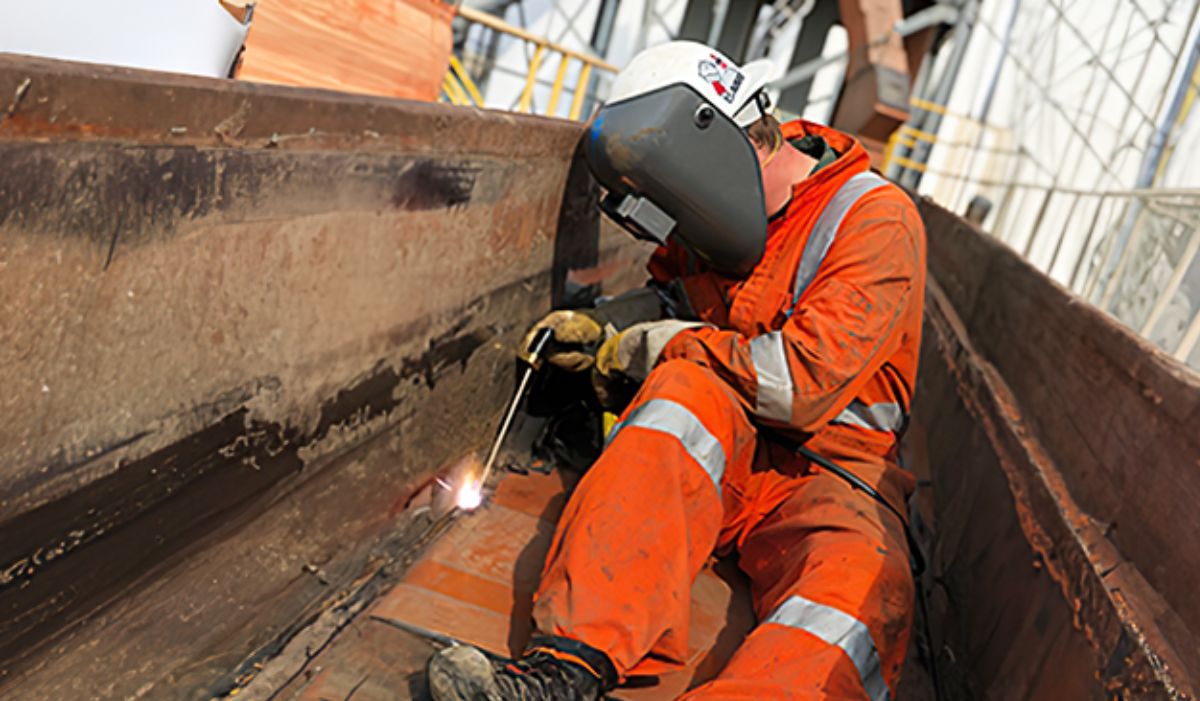
A multi-trade contractor who directly employs millwrights, ironworkers, welders, scaffolders, and carpenters eliminates that competition. The trades are already on staff. They work together on a regular basis. They know each other’s sequencing. And when your project scope changes mid-execution — which it always does — the decision about how to adjust trade deployment is made internally in minutes, not negotiated between five separate companies over two days.
This is not a theoretical efficiency. It is measurable in project outcomes. Facilities that consolidate their industrial construction and maintenance work under a single multi-trade contractor consistently see tighter schedules, fewer coordination gaps, and more predictable costs than facilities managing fragmented subcontractor networks.
What This Looks Like in Practice on a Prairie Industrial Site
Take a plant turnaround at a Saskatchewan grain terminal as a practical example.
A conventional approach involves separate contracts for mechanical, structural, scaffolding, and welding work. Each contractor sources their own crew. The scaffold company may not have their access design coordinated with the mechanical contractor’s sequencing. The ironworkers arrive on day three to find the scaffold is not positioned correctly for their first lift. The welder cannot start the process connection until the mechanical work is complete — but nobody confirmed that dependency in the schedule. Each delay compounds.
A multi-trade contractor approach runs differently. Our Construction Solutions team plans the full scope before mobilization — scaffold positioning is designed around the mechanical and structural sequence, not independently of it. Millwrights, ironworkers, welders, and scaffolders are all working from the same project plan under the same supervision. When the scope changes — when an inspection reveals additional work that was not visible before shutdown — the trade deployment adjusts internally without contract renegotiation.
For plant turnarounds in Saskatchewan specifically, this integration is not just a convenience. It is the difference between finishing within your shutdown window and explaining to your operations team why you need another three days of downtime.
Construction Labour Solutions Start Here: Why Pre-Qualification Protects Your Project
One of the most underused construction labour solutions available to Prairie industrial operators right now is contractor pre-qualification — establishing which contractors have the trade depth, safety credentials, and site experience to work on your facility before you need them.
Most facilities do this reactively. A project comes up. They issue an RFQ. They evaluate responses. They discover the contractors with the right experience are already booked. They make a compromise.
Facilities that handle the labour shortage best do not wait for the project to start the conversation. They identify the contractors who can genuinely service their sites — with the right COR certification, the right multi-trade capability, the right Prairie industrial experience — and they maintain those relationships before the pressure of a specific project timeline is involved.
Our sub-contractor pre-qualification process reflects exactly this approach. Knowing who can deliver — and confirming their credentials and capacity before the work is awarded — is how project owners protect their schedules in a tight labour market.
The Role of Maintenance Contracts in Labour Planning
Here is something that operations managers in Saskatchewan and Alberta are increasingly figuring out: a long-term industrial equipment maintenance services contract with a multi-trade contractor is one of the most effective construction labour solutions available.
A facility that has a standing maintenance relationship with a contractor has priority access to that contractor’s trade capacity. When the labour market tightens — and it has tightened significantly across the Prairie provinces in 2026 — the facilities with established maintenance contracts are the ones whose calls get answered first. The ones trying to find a crew for a one-off job are the ones waiting.
This matters for more than just planned maintenance. When an industrial equipment breakdown happens at two in the morning at a remote Saskatchewan site, the facility with a maintenance contract gets a qualified crew mobilized. The facility without one gets a callback during business hours.
Long-term maintenance relationships also give contractors the site familiarity that makes their labour more productive. A millwright who has worked your facility’s conveyor systems for three years knows things about how those systems behave that a crew arriving for the first time simply does not. That knowledge is worth something — and it only accumulates through an ongoing relationship.
Planning Your Labour Strategy Before the Next Project
Industry leaders are clear that the skilled trades shortage is the single most underappreciated constraint on Canadian project delivery right now — and it is not something that resolves on its own.
For Prairie industrial operators, waiting for the national conversation about construction labour solutions to produce results is not a strategy. The apprenticeship pipelines, the immigration credential reforms, the workforce development programs — all of that is important work that will matter in five to ten years. Your plant turnaround is in September.
The practical construction labour solution available right now is contractor structure. Work with multi-trade contractors who directly employ qualified trades rather than subcontract them. Establish those relationships before the pressure of a specific project timeline. Consider long-term maintenance contracts that give you priority access to trade capacity when you need it most.
Credence Construction’s team of millwrights, ironworkers, welders, scaffolders, and carpenters work across Saskatchewan and Alberta as an employed multi-trade crew — not a network of subcontractors assembled per project. Our repair and maintenance and drafting and design capabilities round out a full-service offering that Prairie industrial facilities can rely on regardless of what the broader labour market is doing.
If you want to discuss what a multi-trade contractor relationship looks like for your facility’s upcoming projects and maintenance requirements, connect with the Credence team before your project timeline makes the decision for you.