Industrial Roofing: How Steel-Framed Roofs Are Built, Repaired, and Replaced on the Prairies
Most roof problems start somewhere you can’t see. A leak shows up on the plant floor, someone climbs up and patches the spot, and six months later the leak is back three metres to the left. The patch wasn’t the failure. The roof underneath was. That’s the thing about industrial roofing: the covering gets the attention, but the steel structure under it decides how long the roof lasts.
On the Prairies, that structure carries heavy snow, fights wind and hail, and in fertilizer and grain facilities sits in a corrosive atmosphere. This guide looks at industrial roofing from the steel up: the main roof systems, what shortens their life, how to decide between repair and replacement, and how to keep crews safe on the roof while the work happens.
What Is Industrial Roofing?
Industrial roofing is the roof system on a factory, plant, terminal, shed, or processing building: the structure, the deck, and the weatherproof covering on top. It’s built for larger spans, heavier loads, and tougher conditions than a typical commercial or residential roof, and it often has to keep working while the building underneath runs around the clock.
An industrial roof is really three layers working together:
- The structure. Steel beams, trusses, or rafters, plus purlins that carry the roof.
- The deck or panels. Corrugated steel deck, or metal roof panels fastened to the purlins.
- The weather layer. Metal panels themselves, or a membrane over insulation on a steel deck.
If you only inspect the top layer, you only see a third of the picture.
Common Industrial Roofing Systems
There’s no single best roof. The right system depends on the building, the slope, and what happens inside.
Metal roofing uses steel panels fastened to purlins. It’s common on sheds, warehouses, and terminals because it’s durable, relatively light, and sheds snow well on a slope. Fasteners, seams, and panel overlaps are the usual weak points, and thermal movement from Prairie temperature swings works on them every day.
Membrane roofing on steel deck puts insulation and a waterproof membrane, often single-ply, over a corrugated steel deck. It suits low-slope and flat roofs. Seams, flashing, drains, and penetrations are where leaks tend to start. Our guide to metal decking explains the deck these systems rely on.
Built-up and modified bitumen roofs use layered materials for low-slope roofs and are common on older industrial buildings. They can last a long time but are heavier and need regular inspection.
In practice, a specialty roofing crew often installs membranes while the steel contractor handles the structure beneath. Clear scope between the two avoids gaps, and it matters most when something fails.
What Shortens the Life of an Industrial Roof
A roof rarely wears out from age alone. A few causes show up again and again:
- Corrosion. Fertilizer dust, moisture, and condensation attack unprotected steel and fasteners. Coating choices matter here, which we cover in our guide to industrial coatings for structural steel.
- Snow and ice load. Snow doesn’t sit evenly. Wind drifts it against higher walls, rooftop equipment, and changes in roof height, which concentrates the load.
- Wind and hail. Prairie storms loosen fasteners, dent panels, and puncture membranes.
- Thermal movement. Big temperature swings expand and contract steel every day, working seams and fasteners loose.
- Ponding water. Water that sits on a low-slope roof adds weight and wears the membrane.
- Deferred maintenance. Clogged drains, loose flashing, and small leaks left alone become structural problems.
On snow load specifically, the National Building Code of Canada is a model code that provinces adopt, and the National Research Council publishes the structural commentaries for Part 4 of the 2020 code, which cover snow and wind loads on roofs. Check which code your province applies.
Industrial Roof Repair vs. Replacement: How to Decide
Industrial roof repair makes sense when damage is local, the structure is sound, and the roof has useful life left. Replacement makes sense when problems are widespread, the structure underneath has deteriorated, or repairs keep failing.
Questions that help:
- Is the damage local or everywhere? A few failed seams are a repair. A pattern across the roof is a warning.
- What’s the condition of the deck, purlins, and framing? Corroded steel changes everything, and our post on structural steel repair vs. replacement covers how that call is made.
- Is there wet insulation? Water trapped under a membrane spreads quietly. Thermal imaging can help find it.
- How many repairs has this roof had? Repeated patches at the same area point to a deeper cause.
- Will the building’s loads change? New rooftop equipment or solar panels can change what the structure needs to carry.
This is a judgement for an engineer and an experienced contractor working together, not a guess from the ground.
How We Approach Industrial Roofing Repairs
Our project work includes fertilizer dome roof repair and fertilizer dome roof replacement, along with storage shed roof repair, so we’ve worked on the structure and the roof together in demanding fertilizer environments. Our repair and maintenance team approaches a roof the same way as any other structure: inspect, find the real cause, and fix that, not just the leak.
Working Safely on Industrial Roofs
Roof work combines height, weather, and fragile surfaces, which makes planning non-negotiable.
- Fall protection. Edges, skylights, and openings need a documented fall protection plan before anyone goes up.
- Safe access. Scaffolding and edge protection need a proper scaffold inspection checklist before use.
- Job planning. A job safety analysis should cover the roof’s condition, weather, and any fragile or corroded areas.
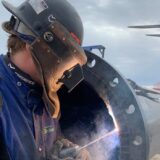
- Hot work. Cutting or welding near insulation and roofing materials is a fire risk and needs a hot work permit.
- Winter conditions. Frost, ice, and cold change the risk, which we cover in our post on cold stress.
What to Ask a Contractor About Industrial Roofing
Before you hire anyone for industrial roofing work, ask:
- Who is responsible for the structure, the deck, and the weather layer?
- How will you inspect the structure, not just the surface?
- How will you handle water that’s already gotten in?
- What fall protection and access plan will you use?
- What warranty applies, and who stands behind it?
Specific answers suggest a contractor who has done this before. Vague ones usually don’t.
Frequently Asked Questions About Industrial Roofing
What is industrial roofing?
Industrial roofing is the roof system on factories, plants, terminals, and sheds, including the structure, the deck or panels, and the weatherproof layer, built for heavy loads and demanding conditions.
What are the main types of industrial roofing?
The common systems are metal roofing, membrane roofing over steel deck, and built-up or modified bitumen roofs. The right one depends on the building and its conditions.
When should an industrial roof be repaired instead of replaced?
Repair makes sense when damage is local, the structure is sound, and the roof has useful life left. Widespread damage or a corroded structure points toward replacement.
Why do industrial roofs leak?
Common causes are failed seams or flashing, loose fasteners, corrosion, ponding water, and clogged drains. A leak often starts away from where it appears inside.
How often should an industrial roof be inspected?
Regularly, and after major storms. The right interval depends on the roof’s age, condition, and exposure.
Fix the Roof, Not Just the Leak
Industrial roofing works best when you treat the roof as a system: structure, deck, and weather layer. Fix the cause and the roof lasts. Patch the symptom and you’ll be back up there next year.
Credence Construction repairs and replaces roofs and supporting structures across the mining, agricultural, and industrial sites we work on in Saskatchewan, Alberta, Manitoba, and Western Ontario. If you have a roof that keeps leaking or a structure you’re worried about, call us at 306-786-7000.